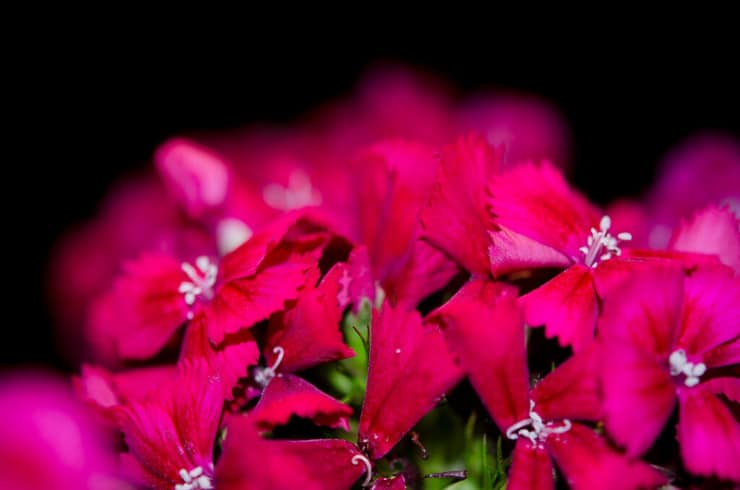
For her father, Ayala Zarfjian honors the family lost in the Holocaust.
“The war endures in you,” writes poet Ayala Zarfjian, “It lingers in your capillaries, / in your arteries, / in your veins. / The war is a river that bridges the past to the present.” The war she’s speaking about is World War II and the part of the war that made it unlike any other – the Holocaust. If you’re Jewish, the Holocaust is not something that’s ever over.
That’s the theme that threads through every poem in Zarfjian’s collection A Corner in the World. She wrote the poems specifically for her father, who survived the Holocaust while most of the family perished. Zarfjian has written them so that the stories they tell, and the people they’re about, will not be forgotten, that the Holocaust itself will not be written off as someone’s crazy conspiracy theory but the real destruction of people, millions of people, that tragically, horribly happened.
Her stories are simple and straightforward. They don’t need to be cloaked with metaphor or simile, or alliterative, rhyming words. They stand on their own, stripped of ornament. They simply need to be told.
The first bombs dropping. The invading troops. The random violence and terror that would soon become systematic. The doll that belonged to some murdered child. The torture using meat hooks in a slaughterhouse. The boy tied to a horse and killed by dragging. Another boy, living years later as a man in Tel Aviv telling stories to his daughter. The looting of Jewish homes and possessions. The typhus in the camps. The elderly aunt who survived but has never felt the fear leave her. Drinking water from rain puddles.
Two of the most affecting poems concern an uncle and aunt of her fathers. Uncle Jan was a larger-than-life figure, with his joyous smile as he lifted his nephew into the air. And his wife, Aunt Sally, who survives the concentration camp only to meet another fate when she returns home.
Sally
 For Aunt Sally Eckhaus
I no longer remember the sound of her laughter.
I no longer remember the scent of her perfume.
Did she bake challah for the sabbath?
Did her hands form a perfect braid?
The wind whispered her name.
Her hair flowed when she walked.
Darkness, illuminated by her smile.
She embraced her husband for the last time.
The memories of their newlywed days sustained her.
Their faces beamed when they found each other in a crowd.
Their hearts beat as one.
Their unconscious flowing tenderness was seamless.
A dance of life, filled with beauty and kindness.
Sally mourned my beloved uncle’s death.
Devastated and alone she returned
to reclaim their home.
The villagers that pillaged their possessions
took her life.
Her body was dismembered.
I imagine all the places where
the parts were thrown.
Patches of beautiful lilies grew there.
“Sally” is a reminder that it wasn’t only Nazi Germany’s forces that were responsible for the Holocaust. Often, neighbors and fellow villagers were just as brutal and murderous.

Ayala Zarfjian
These poems embody grief, yes. But, oddly enough, they’re also about hope. Many survived and went on to live their lives, marry, and have children. But it’s still a sobering thought to realize that more Jews were alive in 1939 than exist today. In A Corner of The World, Zarfjian is keeping memory and hope alive, along with the determination that the Holocaust will never be forgotten, because it can happen again.
Photo by Thomas Tolkien, Creative Commons, via Flickr. Post by Glynn Young.

How to Read a Poem uses images like the mouse, the hive, the switch (from the Billy Collins poem)—to guide readers into new ways of understanding poems. Anthology included.
“I require all our incoming poetry students—in the MFA I direct—to buy and read this book.”
—Jeanetta Calhoun Mish
- When a Poem Completely Eludes You - October 8, 2026
- “Paul Celan: A Life” by Anna Arno - October 6, 2026
- Reading Paul Celan for the First Time - October 1, 2026
Leave a Reply