
Paul Celan’s poetry reflects a tragic life.
I’ve been reading a biography of the poet Paul Celan (1920-1970). I must confess my ignorance; I’d never read his poetry before. And I thought, for what turned out to be an explainable reason, that he was French. I was close – he lived in France for about the last 20 years of his life.
It was the biography, published this year by Anna Arno (and translated from the Polish) that lead me to his poetry, which has been collected into two, rather large, volumes. Memory Rose into Threshold covers his early poems; Breathturn into Timestead covers the later poems. The two volumes are more than 700 pages each; pat of the reason is that the poems are published in both English and the language Celan wrote poetry in – German.
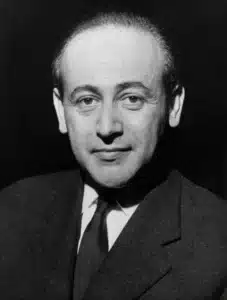
Paul Celan in 1952
Writing in German is part of Celan’s story. He wasn’t born in Germany; his hometown was hundreds of miles away in what had been the Austro-Hungarian Empire, had recently been carved out as part of Romania, and would eventually become part of what is now the western Ukraine. He was an only child, doted on by a mother who adored Germanic culture. German was spoken in the home. And that, perhaps more than anything, explains why Celan wrote poetry in German.
Celan and his family were also Jewish. That meant they were encouraged by the Habsburgs, persecuted by the Romanians, expropriated by the Russians, and murdered by Hitler’s Germans. He lived through most of that. He survived most of that. But it would also haunt him his entire life, and it likely contributed to his suicide in 1970 in Paris.
So far, I’ve only read the volume containing the early poems, essentially those written from his teen years into his 30s. I find them strange. Creative, yes. Arresting, to be sure. Full of imagery, absolutely. In fact, it’s that imagery that is likely the primary characterization of his poetry. It’s as if he created a world of unexpected images to escape or explain the world he lived in.
The Secret of the Ferns
In the vault of swords the shadows’ leafgreen heart gazes at itself.
Naked are the blades; who in death wouldn’t linger before mirrors?
Here too live melancholias served up in jars:
flowery it darkens upward before they drink, as it were not water,
as if it were a daisy here, queried for a darker love,
for a blacker pillow for the bunk, for heavier hair…
But here there’s dread only for the shimmer of the iron,
and if anything still shines here, let it be a sword.
We empty the jar from the table only because mirrors host us:
let one of them split in twain where we’re green as the leaves.
Consider the images in that relatively short poem – a vault of swords, a leafgreen heart, blades, lingering before mirrors, melancholias served up in jars, a blacker pillow for the bunk, the shimmer of the iron. I don’t know if I can explain why the collective impact made me think of death, but the images did exactly that. In fact, death is a theme in many of these poems. Arno’s biography even introduces itself with one of Celan’s better known poems, “Deathfugue.”
Shroud
 What you of gossamer wove,
I wear in honor of stone.
When in the dark I wake the
screams, it wafts above them.
Often, when I should stammer,
it throws forgotten creases,
and who I am forgives
the one I was.
But the attlerheapgod
beats his dullest drum,
and just as the crease runs,
the Dark One frowns.
I don’t think these images or themes are surprising. Celan was 20 when Germany trashed the Non-Aggression Pact with the Soviet Union and invaded. The first thing the troops did in Celan’s town was line up the leading jews and kill them. His parents were sent off to concentration camps and would die there. Celan himself landed in a labor camp, assigned to help build a highway. He survived, but he was an eyewitness to ongoing death and destruction.
Next week, I’ll have another post on Celan, this one a proper review of the biography. But I’m already experiencing the sense of sitting with ghosts.
Photo by Lukas Schlagenhauf, Creative Commons, via Flickr. Post by Glynn Young.

How to Read a Poem uses images like the mouse, the hive, the switch (from the Billy Collins poem)—to guide readers into new ways of understanding poems. Anthology included.
“I require all our incoming poetry students—in the MFA I direct—to buy and read this book.”
—Jeanetta Calhoun Mish

- Reading Paul Celan for the First Time - October 1, 2026
- Poets and Poems: Christian Wiman and “The Dance” - September 29, 2026
- Poets and Poems: James Tweedie and “Love Found, Yearned For, and Lost” - September 24, 2026
Leave a Reply