A New Home for Moms on Poetry
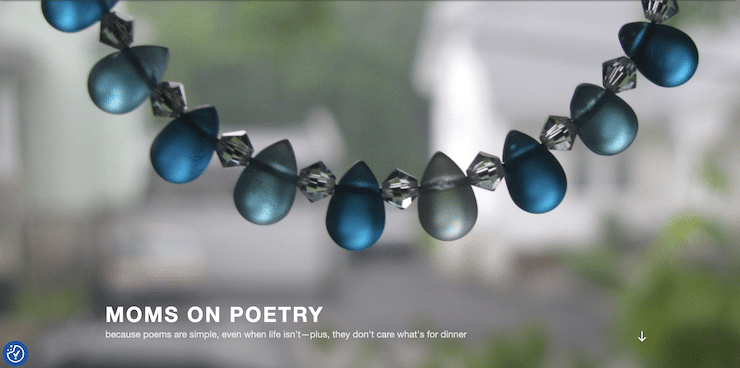
For a number of years we ran a sister site called “Moms on Poetry.” Its tagline was “because poems are simple, even when life isn’t—plus, they don’t care what’s for dinner.”
The original site is no longer active, and we’ve moved the material here to Tweetspeak. On the home page of Moms on Poetry, this is how the site welcomed readers…
I invite you to be a poetic mother
Hi there. 🙂 If you don’t know me already (and even if you do), let me introduce myself.
I’m L.L. Barkat. Author, dreamer, tea lover.
I am also, quite deeply, a mom.
Yes, my heart has been stolen by two girls who I’ve raised now for quite a few years. Sometimes it’s been crazy fun. Sometimes it’s been crazy hard. But always, it’s presented me with a challenge: to keep a jewel-like part of myself alive, even as I help them shine.
Eventually, I turned to poetry for the simplest sparkle I could find.
That did not come out of nowhere.
Every day before the school bus came, my own mother, who was, to me, the smartest and funniest and most beautiful woman in the world—this woman, she gathered my sister and I to her side on the golden couch and read poems to us while we waited.
The golden couch was hers, in its way.
She had picked it out.
She loved it.
It was one of the few things that made her hard life lovely.
I really don’t know (I have not asked her) what inspired this daily before-school reading ritual. But I believe it changed the trajectory of my life. Not right away. (Isn’t that how mothering goes? It can take a long time, sometimes, to see our best influences come to light in our children.)
A few years back, I returned the poetry favor, in a small way, to my mom.
In my bag, I carried a hard but lovely collection called Why the House Is Made of Gingerbread.
She had had a silent heart attack and only just discovered it by accident. Days after the discovery, she’d gone into the hospital for a quintuple bypass surgery. I took the long trip north, with my poetry book secreted away in my bag, and I went to be by my mother’s side.
She was completely still when I walked into the room. There were machines beeping and voices hush-talking. I touched her hand. It was cold as ice.
Eventually, she woke from her anesthetic slumber. I told her I loved her. I pulled a blanket up for her. I gave her, one by one, ice chips for her parched lips. The next day, I knew, I would read her poetry, but I did not mention this at the time. The next day, as it turned out, she would tell me about the golden retriever who was bringing solace to those in recovery, room by room.
And so, when the following day came, I did read her some poetry. In this atmosphere of tiny talk, I also learned things I never knew about my mom, like that she had grown up on a farm (how could I have missed this?). The poems had become a small gathering—of her to my side, and me to hers.
Years later, I have now begun tucking poems into my heart and mind by memorizing them.
From solace to laughter, these poems have served as grist and gatherings, as I relate to my growing-up daughters. Someday, I hope, if my girls are ever by my side, pulling a blanket up to warm me, the poems will be there, in my mind or theirs, to gather us to each other and bring some kind of golden light to our hearts, even as the poems now give us ways to celebrate together, laugh, and just do life.
This is my story. Or, a very small part of it.
It’s a bit of why I invite you, if you aren’t already, to become a poetic mom. Or, a mom on poetry. I want something golden, something gathering, for your life. Something lustrous but simple that, in its way, is just yours, unless you decide to share it.
Come, be a mom—on poetry.
With quiet sparkle,
L.L. Barkat
daughter, mom

And Here Are the Poems
All the poems in no particular order…
Embrace
The baby imprints
her face to your face
forehead to forehead,
mouth to mouth, blowing raspberries on
any soft part of you.
Embrace fleshiness
thick legs strong.
Carry the four-year-old on your back,
the one-year-old on your hip.
Your arms
surround these children
who press themselves
into your body.
Boundless love,
a great acceptance of you
as you are right now:
disheveled, mussed, tired,
unsung in any circle
but this one.
—Lara Payne, first appeared in SWWIM Every Day. Used by permission of the poet.
Daughter, Home
Pandemic 2020
Oh I wish for the irrational—
to have her here always,
not two thousand miles away where
her life is after college.
My heart croons a little to hear
her laughter from two floors away, when
I see the dinner table set for three and not two,
the dishwasher loaded with extra bowls
and flatware; when I have to remember
to buy the 1% not the skim milk this time;
when she asks can I please fry up some eggs
over-easy because she says she can never get them
just right; even when I blow it and the yolk breaks
and spills its bright gold all over the pan, to hear her say:
Thanks Mom, that is just fine, this is so good.
—Andrea Potos, from Marrow of Summer, Kelsay Books, 2021. Reprinted with permission of the poet.
Mother of Letters
For hours my mother hovered over us,
her hand gently guiding mine, her wrist
a helm for my unsteady ship.
I knew how to hold a pencil,
how to grip it between my thumb
and pointer finger, how to lean softly
to avoid a callus. I knew how to form
all my letters perfectly before starting school.
For every birthday, a new notebook
would appear wrapped tightly with a bow.
I would bury my nose inside it
as if the pages would write themselves
with my breath. The pages I’d fill with words
my young tongue was too knotted to express.
—Tiana Nobile, from Cleave, Hub City Press, 2021. Reprinted with permission of the poet.
02. Snoopy
What does it feel like when you are in fourth grade
and your mom gets cancer?
It feels like that day I brought my Snoopy
lunchbox to school, the yellow plastic one
that snapped closed with a click,
got left on the playground, forgotten.
The next morning that playground was covered
with shards of yellow plastic.
What else can you do but bring your lunch in brown paper bags
for the rest of the year
for the rest of every school year to come
and pretend you like it that way.
—Megan Willome, reprinted from her series ‘My Mother’s Diary.’
Bon Voyage
We’ve gathered on the dock. Mother wears a custom-made suit, bold black and white checks, the skirt fitted tight. My sister and I teeter beside her, two untethered buoys, dresses buoyant in the breeze. With her hand shading her eyes, Mother watches the ship, a sailing city crowded with waving couples against a white, white exterior. Bon Voyage, Bon Voyage, we cry to friends of Mother’s, the wife barely recognizable beneath a veiled hat. Corks burst from champagne bottles; shrieks as the bubbling liquid pours over hands and arms. After the ship retreats with an exaggerated Honk, we huddle in the back seat of the car. Let’s pretend we’re sleeping on the ship’s deck chairs, we whisper, and imagine the evening growing colder. Clinging together, our shivering bodies wrapped in widely striped towels. Two girls alone on a boat, the water black and rushing past, lips salty.
—Tina Barry, from Mall Flower, Big Table Publishing, 2016. Reprinted with permission of the poet.
First Grade
Nudged awake,
in the still-dark morning,
by the sound of her shower’s rainfall—
I’d drag my aqua comforter to the toast-colored carpet
outside Mom’s bathroom. I’d drop the heap
and loll in the folds,
watching mist rise
from the slit of light beneath the door.
Before the tap of words was opened,
I’d ease into the school day,
inhaling her drugstore citrus,
and listening to the downpour
break on her first.
—Bethany Rohde, first published at Mothers Always Write. Used with permission of the poet.
Her Hair, a Braid
Lips wavy in the chrome teapot’s reflection,
you mouth for-ty, slowly, and again,
for-ty, as if it were a word discovered,
not the years since your mother’s death.
Would it help if I mention the boxes
in the basement?
She’s there, in a tin, loosely wound
beneath sepia tissue paper, a braid
to worry in your fingers.
I want to tell you I wore a coat
today with a fur collar
like your mother’s mink pelts.
Black and oily, they smelled
of crowded ships and herring,
wood smoke on snow.
—Tina Barry, from Mall Flower, Big Table Publishing, 2016. Reprinted with permission of the poet.
My mother, the fixer
I imagine when she
shot the raccoon
as it drank the tepid
mid-day rain
from my brothers’
kindergarten-colored,
water-dotted
plastic play set,
she used the sun’s
ray as a scope,
the weight of
my pudgy infant brother
pulling tight like a sling
on her arm, another son
clinging to her calves,
clamping her to the earth
with the steadying force
of ten toddler fingers
as she slid open
the screen door, pointed
the barrel at the backyard menace
and pulled the trigger
just once,
without ceremony
without raising her
blood pressure,
heart rate, eyebrow-simply
disappearing the problem
as if she was smoothing
the wrinkles of a sheet.
—Shannon J. Curtin, from Motherland, Anchor & Plume Press, 2015. Used with permission of the poet.
Back to Life
Daughter delivered by an attendant:
silent and watchful in your orphanage smock
with the cartoon dog, and pilled mended pants.
A smell of mildew came from your shock
of sweaty, cropped black hair. Stuck to your chest,
in English and Chinese a name tag read
Happy Springtime: a name pressed
upon you by no father, mother. Closeted
from the world before you came to us, as if
in some ancient tomb carving of a child
rising from the grave in a flowing shift.
Freed from the humid earth, she almost smiles.
You don’t remember, but love to be told
how they brought you through the doors and you were ours.
But buried in you is that place, still. Were you cold,
solitary, left wanting, maybe for hours . . .
Don’t go there, I tell myself. Instead,
I grab you and inhale your fragrant head.
—Carole Bernstein, from Buried Alive—A To-Do List, Hanging Loose Press, 2019. Used with permission of the poet.
The Wordless: The Unspoken and Unnamed
At six months pregnant, the limits of language make me cry
about every sound: all the lowing cellos—sounds strung up
on laundry lines, displayed like underwear flapping itself crisp
and unopening, how the bow moves like wind across strings—
every tinny brass—beaten into my palms, stalled and toed
up my arms. I don’t play an instrument, but I’m missing
words to explain how every sound feels, how it feels
to grow another woman inside me, how to explain God—mostly that—
and the child with my hair and eyes I’ll never someday have. How
can sadness mean all this? The words, nameless as the Water-Drawers,
the Damsels, the 10 Concubines of David—all the unworded women,
unmouthed and untounged mothers and daughters. Some word must
exist to give language to all the women who exist only in the sigh and struggle—
the shuffle on of boots in lingering lines—all those lost to silence.
—Allison Blevins, from A Season for Speaking, Seven Kitchens Press, 2019. Used with permission of the poet.
A. M. : Inside and Out
Here is the landscape of my son,
prying open the horizon with his grin;
of my daughter, trying to crack the sun
with her large laughter.
What of the clock that clucks, “No, no, no”?
They’ve flushed it down the commode
with all the toilet-training paraphernalia
until it backs up in the pipes,
bulges beautifully into the hills
that belch so early, “Hello, hello, good morning.”
Of course, we must answer,
must gather up the dew and daffodils
in our nightshirts, comb our hair through
with the larks’ incessant trill,
our two small ones trailing after us
into the wonderfully, brightening world.
—Marjorie Maddox, from Local News from Someplace Else, Wipf and Stock, 2013. Used with permission of the poet.
Favorite Colors
You notice blue
bonnets blooming
on Texas highways,
blue hues in birds
not normally blue
but black and blue
like grackles’ heads,
old ladies with blue hair
not on black, but white
the tint a rinse gone awry,
a bad dye job like the time
you pulled up in the garage
not one, not two, not three
but four hours late,
your hair orange. You
said it looked better than
before first glance
of green, you’d seen a horror
movie: Frankenstein. Oh, how
you’d die if social climbers
disclosed ungodly sheens
not once, not twice, but three
times red and gray
gone green
gone yellow
gone orange
flecks of thread in blue
couch where we’d sit
and chat, just the two of us,
over coffee and blueberry scones.
—Laurie Kolp, from Hello, It’s Your Mother, Finishing Line Press, 2015. Used with permission of the poet.
Cooking Class, Illinois, Mid 70s
Along her immaculate counter: silo
of red-handled sifter, bright order
of silver spoons, lemon bales of butter
softening in late winter light. In cupboards
her husband the carpenter built, bars
of Baker’s Chocolate, dried figs, quartered
apricots and Mason Jars of brined harvest.
A good cook puts up her hair, wears
apron, stores flour in freezer to keep
Boll Weevils out, uses shells of her egg
as a tool to separate yolk from white.
She also wears dresses, I learned
when, for donning jeans, she informed me
she no longer wished me to babysit. She cited,
over the phone to my mother, the effect
it might have on her son, the kind of wife
he might choose, the man he’d become
as I chased him on my hands and knees round
the living room’s glass table she refused to move
when he was born. He’d learn, she’d said, he’d learn
soon enough, where he stopped and she began.
—Tania Pryputniewicz, from Casual: A Little Book of Jeans Poems & Photos, T. S. Poetry Press.
On the Eve of Your Thirteenth Birthday
for Jeffrey
the last day of twelve
was nothing special,
you said.
you didn’t dress for gym,
didn’t play four-square with
the others. only walked,
you said.
In English, you wrote
a myth…about Gusano—
it means worm in Spanish
you said.
this Greco-Spanish
worm-god found freedom,
you said.
but he led his people
back into the
earth to rule the Underworld
and that’s why he will
be responsible for
the zombie apocalypse,
you said.
and math was about
interest, like money and
banks, you know?
you said.
and you have homework
so you came home in
a bad mood and didn’t
want to talk about twelve
you said.
so i hushed and got out
the eggs, cracked them one-by-
one in the bowl and mixed until
those yellow eyes are gone; i
rubbed grease on the pan that is
swathed in black enamel
from years of cradling sweet
batter…and i poured more
in. you at the table building
up interest when the room
starts to smell like a birthday.
and suddenly, you are there,
beside to lick the batter from
the bowl. what time was I
born?
you said.
—Laura Boggess, featured in The Joy of Poetry, T. S. Poetry Press, 2016. Used with permission of the publisher.
Set
After raspberry pancakes
Mom declared
in our olive-green kitchen:
today, I’ll teach you to swing.
She hoisted her own
thick hips
into the black smile
next to me
pumped sky
in her stone washed jeans.
Just gotta lean
into it.
Then below that bar of rust,
her seat suddenly
snapped.
She gripped the old chains—stuck the landing.
Remember our laugh?
Lung-crush of hilarity
while everyone else
held their
breath.
—Bethany Rohde, from Casual: A Little Book of Jeans Poems & Photos, T. S. Poetry Press
Dear—
1
What if
2
What if the only way
she could write again
required a white cup
3
And the cup,
would she pour herself
into it? Or, rather, bring it to her lips.
4
What if
5
What if she held the cup very close,
by its delicate white handle,
and whispered into the hollow.
6
Something like—
I was five, and he said
pick mulberries with me;
I could show you the tree
on which they weep and sway.
And her mother held her chin
and said, tell him no…
it would spoil your hand-sewn dress.
—L.L. Barkat, from The Novelist, T. S. Poetry Press, 2012. Used with permission of the publisher.
Lambent
You see, it is more complicated
than that. I said it was the untutored search
for lambent, astral, welter, and the river of stars.
But my mother would not know
the meaning of lambent, welter, astral—
though the river of stars
is a place she walked me, pointing
on the darkest nights, when I suppose
she wanted to escape her memories
and show me something of the world,
the kind of something only she
could show me.
What did she know of astral predictions,
when she simply walked the nights to forget
the welts of time
and the long-gone days her father’s boots
met her mother’s face in the lambent
living room, where kerosene lamps
could not light her hiding place
beneath the sideboard (why was the sideboard
in the living room?)
You see the complication now.
And how a passel of big talk
tells her this: what do you know
of the world? You never even learned
to chop an onion, through its many
moistened skins. You couldn’t keep
my father, Ivy man of words…
when all you knew was the river,
and the stars.
—L.L. Barkat, from The Novelist, T. S. Poetry Press, 2012. Used with permission of the publisher.
Hurry
We stop at the dry cleaners and the grocery store
and the gas station and the green market and
Hurry up honey, I say, hurry,
as she runs along two or three steps behind me
her blue jacket unzipped and her socks rolled down.
Where do I want her to hurry to? To her grave?
To mine? Where one day she might stand all grown?
Today, when all the errands are finally done, I say to her,
Honey I’m sorry I keep saying Hurry—
you walk ahead of me. You be the mother.
And, Hurry up, she says, over her shoulder, looking
back at me, laughing. Hurry up now darling, she says,
hurry, hurry, taking the house keys from my hands.
—Marie Howe
“Hurry”. Copyright © 2009 by Marie Howe, from THE KINGDOM OF ORDINARY TIME by Marie Howe. Used by permission of W.W. Norton & Company, Inc.
Tricks
At fifteen, I drew stick figures
of my parents and me,
without flesh or feature,
quick, sexless.
Dissatisfied, I turned my pencil aslant
adding a tipped smile,
breasts and fingernails.
Knowing the tricks of the graphite then
I saw how easy it was to cause
and not analyze.
I could add apples to a tree’s branches
whether it had foliage or not,
and a peach tree could bear plums.
My drawings of my children are dimpled.
They shine like glazed paper.
This one of my son seems overpopulated,
so I will erase the brain that bedevils him
with pleated thoughts shuffling
like poker cards.
If I rub the eraser across my daughter’s heart
she’ll make her way like a straight-eyed
comet, leaving a wake of hunger.
—Luanne Castle, from Doll God, Aldrich Press, 2015. Used with permission of the poet.
Window
Outside, the Maple seeds turn as they fall,
turn in complex spirals from their branches.
Sleep, baby, as I rock, as the Maple sways
in the gusts of air, shaking loose its twirling birds.
I have been you, wrapped warm near a forgotten pane,
seasons rushing, now it seems, through dresses, shoes,
cap and veil, the leaves rolling behind my eyes,
over Fall lawns, then buried under flawless snows.
What shapes and sound conspire to bring you dreams,
before you discover the scattering force of the world.
There will be a morning when you rise and find a road away
from me, my love left pressed like Maple leaves in a book.
Years will pass in pages I write to keep you
in my heart; the years will turn in orbits near and far.
For now, by this window, I hold you, your touch
like the small fingers of the rain—beyond us,
the leaves, and the indifferent arms of the wind.
—Rick Maxson, from Under the Pearl Moon, T.S. Poetry Press, 2023. Used with permission of the publisher.
Naming
The way a name lingers in the snow
when traced by hand.
The way angels are made in snow,
all body down,
arms moving from side to ear to side to ear—
a whisper, a pause;
slight, melting hesitation—
The pause in the hand as it moves
over a name carved in black granite.
The Chuck, Chuck, Chuck,
of great-tailed grackles
at southern coastal marshes,
or the way magpies repeat,
Meg, Meg, Meg—
The way the rib cage of a whale
resembles the architecture of I. M. Pei.
The way two names on a page
separated by thousands of lines,
pages, bookshelves, miles, can be connected.
The way wind hums through cord grass;
rain on bluestem, on mesquite—
The sandpiper’s tremble
as it skitters over tidal mudflats,
tracking names in the wet silt,
silt that has been building
since Foreman lost to Ali,
since Troy fell—building until
we forget names altogether—
The way children, who know only
syllables endlessly repeated,
connect one moment to the next
humming, humming, humming—
The way magpies connect branches
into thickets for their nesting—
Curve of thumb caressing
the letters of a loved one’s name
on the printed page, connecting
each letter with a trace of oil
from fingerprint to fingerprint,
again and again and again—
—Scott Edward Anderson, from Fallow Field, Aldrich Press, 2013. Used with permission of the poet.
And My Love Goes With Him
in bursts of static song over a short-wave radio
in the coldest winter tucked into his blue wool socks
through the red, muddy water in the gutter after rain
in the cornerstone of the ground floor of his dormitory
woven into the wonderful purple of a southern twilight
and the strutting peacock of a clear mid-afternoon sky
up a steep ladder, down a steep hill: wherever he draws
breath: the oxygen, the carbon, the nitrogen, the pine
—Donna Vorreyer, from A House of Many Windows, Sundress Publications, 2013. Used with permission of the poet.
Question in the Face of Devotion
She has her sights set on India
her face holds a goddess glow when she shows me
the project on a cartoon colored map.
Her green eyes shock me deep into my green heart
she is a whisper in a silk sari
rose-gold bracelets sing on her brown wrists.
Will she disrobe in Goa
swim in the Arabian Sea
make a string bikini offering
leave her hammer on the shore?
She left her running shoes on my doorstep
I hold them like a cat’s trophy, see the shape of her
toe in the leather, feel the bending of her soul.
—Vicki Vener Iorio, from Poems from the Dirty Couch, 2013. Use by permission of the poet.
Blessing For My Daughter Leaving for School
You will swim with sharks,
harvest sponges, try to save
lionfish, turtles, the endless sea.
You will breathe in water,
Daughter, who learned
to breathe in me.
Everything tender
must be released.
—Sarah Dickenson Snyder, from The Human Contract, Aldrich Press, 2017. Used by permission of the poet.
Shade Half Drawn
How strange: the only people out, these two
a girl, her aunt or grandmother
strolling
statelier than lilies grow
in weather they make a small crowdedness
for warmth, fly before the rain like chaff
immune to change they come down the block
as they do day after day
in a small pink coat in practical beige
linked by fingers, the walk home from the store
there is no sound
except the shuffle of sensible, rubber-soled shoes,
the tattoo of first heels
lavender along the sidewalk knots
and unknots its fragrance
the light changes around the window,
stretching, the maple shooting skyward
their hands pull apart
and you want to do something
sacrificial, and magnificent, to preserve
those figures under a turning sky that is not on fire
that does not fill with ash, that lowers only fat
snow clouds onto the roofs and ornamental cherries.
—Anne M. Doe Overstreet, from Delicate Machinery Suspended, T. S. Poetry Press, 2011. Used with permission of the publisher.
Trip
We met for family time at an indoor waterpark.
After pizza in our hotel room—cheese, veggie, meat supreme—
we cut shoe patterns out of old jeans
to give some soles some hope.
My grandgirl grimaced at the video
of skinny Ugandan children with jiggers.
Next day, she bought a pair of Nikes
82 dollars
and new jeans
in a skinny cut.
—Sandra Heska King, from Casual: A Little Book of Jeans Poems & Photos, T. S. Poetry Press
New Life
One August, my grandmother wears blue jeans
and thumbs a ride from the Caney Mountain foothills
fifty miles north to the crest of Cedar Gap
and the snaking Frisco line.
On as much steam as her own,
the locomotive crawls into old Las Vegas,
where she baptizes her legs
in the El Rancho swimming pool
just long enough to be snatched up
by a flashy suit.
By sundown, she wears the new life
of a showgirl who never returns home.
Gambler’s dotted die latches at temple and wrist.
The only black and white she’s known before—
local newsprint yielding stories
of falling hog prices,
bumper crops of peaches.
—Dave Malone, from O: Love Poems from the Ozarks, T. S. Poetry Press, 2015. Used with permission of the publisher.
Segments of an Orange
How can I rest?
How can I be content
when there is still
that odor in the world?
— Louise Gluck
Hours before she died, my grandmother
sucked dry three segments of a navel orange
and, claiming her appetite had a short range,
hooked out the pulp with her finger,
shreds catching on her ring. With delicate theater,
she wrapped the untouched sections in a napkin
she’d halved down the center folded line
to keep them fresh for later.
I fly in to sit shiva from Orange County,
where the branches that bear citrus are bent
by a greedy public who can’t resist
loading their bushels with questionable bounty –
the hard, yellowing rinds left hanging by migrant
workers, who know best this business
of surplus, and restraint, and what to pick when.
And all at once, oranges are everywhere:
In the shampoo I use to wash my niece’s hair.
In the disinfectant wiped onto porcelain
fixtures in the home where the dead are lain.
On the plates I fix for guests too old to rise from chairs;
nestled, smugly poisoning the air
from grass-filled bamboo baskets sent by friends.
My niece balances the fruit on her baby-fat palms
before rolling them to the great-aunts, who can’t
remember the exact numbers of their ages but who speak
with accents Polish enough to date them.
” ‘Range,” Corrie says. She’s learning to want
the meaning to match the sound, so when she plucks
it on the string of her tongue over and over
her relatives will marvel and give applause.
She bowls the fruit at every leg in the house,
each pant-suited visitor a pin to strike and quiver.
Tomorrow, one of my grandmother’s sisters
will trip on a forgotten orange and break
her hip, and the doctor will adjust his face
and pat her silk-clad shoulder, and call her, “Helen Dear.”
And in the hospital she’ll tell the story
of my frugal grandmother’s last day
to the congregated bedside brood,
and claim she’d prefer a fruit with more glory.
“But should the season call for an orange,” she’ll say,
“at least make it blood, my darlings. Make mine blood.”
—Jen Karetnick, from Brie Season, Kelsay Books, White Violet Press. First appeared in The Slate. Used by permission of the poet.
Identity
The most popular brand
is just a question mark at the bottom
of an inverted triangle.
Status attached
to a symbol sewn by one thin thread
onto back-pocket denim.
A single breath
of next week’s gossip would break
a bond that weak.
Don’t second-guess. Wear the jeans that fit.
Lie down at the top of the green hill
and let yourself roll. Go home laughing.
—Monica Silva, from Casual: A Little Book of Jeans Poems & Photos, T. S. Poetry Press.
[untitled: My baby boy’s jeans]
My baby boy’s jeans
grow fast as the moon. Midnight!
Please don’t run away.
—Amy Billone. Used by permission of the poet.
[untitled: Nanny, how could you]
Nanny, how could you! Wolf, loon
coyote night diver raven’s wing pendulum
stalk how could you
wear white gloves to search for dust
and set no place for yourself at the table.
—Susan Goldsmith Wooldridge, from poemcrazy: freeing your life with words, Three Rivers, 1997. Used with permission of the poet.
Matriarch
Children off to bed, chatter secrets.
I descend red oak stairs, reach for downy coat,
walk out beneath the moon.
Sled in hand, I pick my way to secret place,
settle plastic red, breathe deep to unwind tight-sprung
day, lie down and look towards the pine.
Branched arms are softness, feathered cradle
calling. Trunk is hips, come to say, sit;
gone is the needle-sharp talk of day.
Nearby, grandmother-curved bush looks
to lap in silence, remembers how it was with young ones,
remembers how grace used to drift in with the night.
—L.L. Barkat, from God in the Yard, T.S. Poetry Press, 2010. Used with permission of the publisher.
My Daughter’s Potato
It sits in a flimsy pie-tin of crimped and corrugated silver,
wrapped in a paper towel my daughter wets three times
a day. My son tells her to chop it, one eye per chunk,
bury it in the yard, then dig it up. But she’s like me,
needs to see it grow. It’s an Idaho potato, nothing special,
useful under the right cut of meat in the crockpot. It withers
in toward its center, wrinkling a bit, like me, color
sucked from my hair’s roots by—I don’t know—this—
arguing—over why potato eyes are called eyes when
they’re seeds: Put down the knife. Leave her project
be. She’s not sure she wants it now, like the time
I saw my 12-string guitar in the hands of the mover
my husband hired—My lucky day, he said and smiled,
my husband right behind chirping, She never plays it, take it
away. What do they know of the grad school hours,
the ways it saved me from myself, useless in a house
of crying babies—I see, with my blind potato eyes I see
and from behind them I dream of guitars washing up,
like parts of me, like plastic shovels of the hotel tourists,
reds, blues, mostly primary yellows, days’ children
long gone, sandpipers taking back the shore.
—Tania Pryputniewicz, first appeared in SWWIM Every Day. Used with permission of the poet.
Captain Depth Perception
I see you like space
between my car and the raised
bumper of an F150 sitting
wider than yellow parking lines.
I know when to brake and back
up, when to cut the wheel
so I turn just far enough
into your space, filling it
with so much of myself that
almost I fill it all, almost
I feel the crunch of fender and truck.
My power saves
paint jobs at a price.
Every hero has her heal.
Mine’s the depth I can’t stop
sensing, a constant knowledge
of our world packed tight,
nearing collision, and the fear
of someone cutting too sharp,
closing the space completely.
At night I know twin lights
of speeding cars enough
to pull out and see we’re safe
in our sufficient depth of space.
—Marcus Goodyear, from Barbies at Communion, T. S. Poetry Press, 2010. Used with permission of the publisher.
Seal Lullaby
Oh! Hush thee, my baby, the night is behind us,
And black are the waters that sparkled so green.
The moon, o’er the combers, looks downward to find us
At rest in the hollows that rustle between.
Where billow meets billow, there soft be thy pillow;
Ah, weary wee flipperling, curl at thy ease!
The storm shall not wake thee, nor shark
overtake thee,
Asleep in the arms of the slow-swinging seas.
—Rudyard Kipling, public domain
Blue Moon
Mom gets two full moons, one early,
one on New Year’s Eve eve when
we talk as only mothers and daughters can—
speech as rocky as the lunar surface.
After she’s gone will I still orbit her earth?
Will her tides still move my every wave?
I am standing alone, waving goodbye.
She will ring in the new year with dreams in her heart,
with the love of her own dear husband, who adores her,
who wishes me a safe drive as I look
in my rearview mirror and the moon
has indeed turned to gold.
—Megan Willome, from The Joy of Poetry, T. S. Poetry Press, 2016. See a book sample.
Anyday
Wash some dirty dishes
Gather up rumpled clothes
Diaper a soft pink bottom
Change the sheets
Pluck a few stray eyebrows
Wonder why
Feed hungry mouths
Drink some black tea
Pick crumbs off the couch
Change the batteries
Read Moo Baa La La La again
Wander room to room
Barely balance an account
Shampoo little brown curls
Pass out vitamins
Write a couple lines of code
Kiss husband hello or goodbye
Scribble a grocery list
Wish vaguely
Sweep up dried playdough chunks
Empty the dishwasher
Fold warm scented laundry
Brush sixty-eight teeth
Type a blog post
Lay my head down
Whisper a prayer
Get one day closer
—T.U.C., first appeared at Tweetspeak Poetry
The cure for writer’s block
is laundry.
Cram both arms with dirty clothes and
stuff them in the washer.
Brim the detergent, vinegar, bleach, if you dare.
Sit back down.
Write a bit more.
In thirty minutes or an hour, the dinger will ding.
Heap the wet mess into the dryer,
but wait.
The dryer is already packed because you forgot
to fold the last load. Divest the dryer.
Fold the clean clothes, arrange them into piles:
one for him, with you beside him (where you always are),
one for the son, one for the daughter —
the closest they will ever be is these towering piles
of bras, boxers, T-shirts, jeans, uniforms.
Now the dryer is void. Fill it.
Sit down again.
Write.
When the dinger dings, ignore it.
Write on.
Forget to clear the dryer.
—Megan Willome, first appeared in Every Day Poems. Also featured in The Joy of Poetry, T. S. Poetry Press, 2016.
Counterbalance
It was horrible but it wasn’t all horrible.
—Cecilia Woloch
Afterward, it was the satisfaction of paying a debt, except
she wasn’t one of those mothers who made us feel
as if we owed her for childbirth and raising us.
It was knowing I didn’t shirk changing the colostomy bag
or dressing the disfigured zipper of staples that closed
her wound, breastbone to groin.
Once I woke to a midnight crash: her with a halo of blood
on the bathroom floor.
It was knowing I could love like that.
Mealtimes, she would frown, push away child’s portions
no matter what recipe I tried, except the marijuana-pill night
when at 10 p.m. she asked me to bake a cake,
and I called my sister: Mum has the munchies!
Chemo shrank her into a stooped monk in a hooded robe.
Strands of fine hair littered her pillow
until it was time to shop for a wig.
I tried on some too. We laughed when I looked worse than she did.
She sprang for the expensive one, nicknamed it Dixie,
felt almost pretty.
And she recovered: her sweetness, generosity,
pain-in-the-ass-ness, even her hair for seven years.
Then it was hearing cancer again from the doctor
who didn’t want to say it, and me expelling the word
like a magician pulling a grenade from my mouth.
I hoped hospice spoke the truth, that it was okay not to feed her,
that her mostly closed eyes, the rambling words
meant she was processing what she needed to: memories,
reconciliations, the willingness to go.
Then, it was knowing she had checked off her final item
when my brother arrived, recovered from his own cancer,
and she woke for a last moment to say his name, Philip.
—Karen Paul Holmes, from No Such Thing as Distance, Terrapin Books, 2018. Used with permission of the poet.
Valentine’s Chai
Sitting in a sunny cafe, I call my parents
because I can’t stand to hear
bad news at home.
So I call from here, on my cell,
armed with chai.
She’s telling the doctor, No more.
She will leave his office with some pills
that will lengthen her sweet tooth in time
for Valentine’s Day.
I quaff my tea and head to the store
for candy hearts, chocolate hearts,
Reese’s peanut butter hearts, heart-shaped
cookies piled with icing—any
confectionary way to say I love you I love
you I love you I love you I love you.
—Megan Willome, from The Joy of Poetry, T. S. Poetry Press, 2016. Used with permission of the publisher.
Still
A clump of bluebonnets stands in the alley long past
Memorial Day. Usually they’re fried by Easter.
In the spring they grow in green pastures, beside busy highways.
Now they look tired, out of place,
like they didn’t get the notice that it’s time
to make room for the warm wild flowers.
Tomorrow is Independence Day, and they’re still there –
barely blue.
The Mexican Hats, the Wine Cups, even
the Firewheels have faded.
Those stubborn bluebonnets hang on like my mother
still thriving through cancer after cancer after cancer.
—Megan Willome, from God in the Yard and The Joy of Poetry, T. S. Poetry Press, 2016. Used with permission of the publisher.
Stayed
for Ann Voskamp
Why do we not
leave home.
Is it really for fear
of what lies
beyond, or rather
for fear that the
roof will abscond
with the doors
and the shutters
we’ve always known.
And who would they
blame if it happened
just so, if the whole
curtained place simply
picked up its stakes,
disappeared on the wind
in our absence. What
are we really afraid
of, why do we not
leave home.
—L.L. Barkat, from InsideOut: Poems, International Arts Movement, 2009. Used with permission of the poet.
With My Mother, Missing the Train
She was always late. At the final minute
we’d run for the city train, which roared right past,
its line of faces scanning us not in it.
The world was turned to terror by the blast
of hot departing wheels. Air seized my mother,
crushing her flustered skirts into a flurry
with me there clinging. Hush, there’ll be another,
she’d say to keep me calm. No need to worry.
But there was a need. The speed of things was true
and rushing traffic urged us both ahead.
I wanted to race again, to burst right through
and make the great train wait. She never said
that missing things was serious, till I grew.
She held my hand more tightly than I knew.
—Helena Nelson, from Plot and Counterplot, featured in The Joy of Poetry, T. S. Poetry Press, 2016. Used with permission of Shoestring Press.
Who Am I?
“Let’s go for a walk,”
she’d say, and then my mother
would circle the block. I’d question
why we couldn’t go farther. My body
could handle it. But Merry
Nell’s couldn’t. She needed a horcrux
or, perhaps, more than one horcrux.
To figure that out, she’d need a longer walk
through the neighborhood. She’d be merry,
as she always was. I am a mother
who likes to push her body.
There’s no question
about it. But every day I question
why I am her horcrux.
Why everybody seems to think that I am walking her walk,
that I am mothering like my mother.
It’s true. My name is also Merry,
and I also chose to marry
at 21. That is not the question.
I need to know how to mother
without one. All I have is a horcrux,
one I bring with me each morning I take a walk:
my own body.
But it’s acting strangely, my body.
It’s giving me signs, as yours did, Merry
Nell. Oh, it still can walk
up actual mountains. But I do question
because it doesn’t feel like mine. It feels like a horcrux.
I feel like I am you, my dear, dead mother.
And I’m not, am I? Holy Mary, mother
of God. Pray. You’re not here in body.
Neither is my mom. She’s only a horcrux.
She wasn’t into you, Mary. She didn’t even have a question
about you. Not even when she couldn’t walk.
Like Harry, I am the horcrux. I am not my mother.
I can still walk, and I still dwell in this body.
But I am Merry Megan. No question.
—(Merry) Megan Willome, from The Joy of Poetry, T. S. Poetry Press, 2016. Used with permission of the publisher.
Lifted
What’s that?
I say, and turn to see you watching me.
Go back, you whisper, coming close,
lifting my hem a little higher.
Okay…
They were young.
She was French and Indian (through Canada),
but they say she looked like Cleopatra.
It was night,
and she and he drove closer to the stars,
somewhere in the Helderbergs
(there is a castle in those hills, I hear,
built by a philosopher, potter, poet).
The sky, I think, was black and red,
too much, as it were, and then
he raised her hem—
for the universe knew, it knew:
you would have need of me.
—L.L. Barkat, from The Novelist, T. S. Poetry Press, 2012. Used with permission of the publisher.
The Find
To me it is just
a cave—a bouldered space
held dark against this mountain.
To you, it opens
dreams of dragons, pink and green
as the dragon-scale shoes
I bought for you just yesterday,
knowing it would be too soon before
you came upon this place, only to find it had become
just a cave, an empty bouldered space.
—L.L. Barkat, from Love, Etc., T. S. Poetry Press, 2014. Used with permission of the publisher.
Whispered
I should tell you
about my hands, small
and experienced.
The other night,
when my youngest daughter
said, as I tucked her into bed,
Tell me something. Tell me anything,
I turned off the light and whispered this:
when I cut the beets tonight,
the red water went all into
the lines on my hands—
so many lines.
—L.L. Barkat, from Love, Etc., T. S. Poetry Press, 2014. Used with permission of the publisher.
Growing Season
Too much spring rain.
The gutters burst
with hundreds of miniature maples.
They have germinated
in their own rotting pods
and stretch their leaves
to the sun. Yank them out,
I tell my husband,
before the neighbors talk.
He climbs a ladder,
cuts the stems loose
with a trowel.
Outside Beijing, the mother
of our next child
digs all day, hair sweeping
the fine soil where black seeds
roll from her fingers.
More drought, they warn,
but she plants anyway,
for you never know
when a storm will hit.
Today, row markers and dirt.
Tomorrow, plump cabbages
glistening on the table.
—Tania Runyan, from Simple Weight, FutureCycle Press, 2010. Used with permission of the poet.
To Be a Pilgrim
To be a pilgrim is to ring the stones
with the clean music of your best black heels,
each click a lucky strike that sparks a fire
to see by, that lights up the long and level road
you walk with no map, no stick, no wheels
to relieve you when your feet ache and tire.
To be a pilgrim own what you own,
stuff it in your clutch, lug it in your tote,
all the heavy history you’d like to lose
nestled up against your dead mother’s shoes.
To be a pilgrim you must be a killer
of myth, a new invention of desire.
Every pilgrim is a truth-teller.
Every pilgrim is a liar.
—Angela Alaimo O’Donnell, from Still Pilgrim, Paraclete Press, 2017. Used with permission of the poet.
Timeless
Some girls, no matter their age, know
Beauty authored their bones, sure as star-fall,
and inhabits them still, extending
a singular charm that delights, like the one
collected with joy that adorns
my mother’s mid-century bracelet,
tarnished now. Can you picture
the tiniest kitchen scale?—
its dial the size of a dilated pupil,
the needle, an eyelash
that really swivels,
from one to our culturally perfect ten, although
grace, bone-deep, begins, Mama said,
light years away, arriving
among us, over and over.
Nor can it be reckoned, or earned,
no matter the distance traveled,
sheltering as the night sky.
Shine, then, she said, shine
before the body winks out.
—Laurie Klein, author of Where the Sky Opens. “Timeless” first appeared in Adanna Literary Journal and online Abbey of the Arts
The Woman at the Stoplight
I see in her face
that oh, she needs it too—
a gap in the day,
cloistered though not
confining,
person-
sized pocket to slip into,
buffered as by a cloud’s
sheer inner lining,
for a breath
of self-replenishment,
self-repair,
or only just
a breath,
and then
(I promise!)
out again,
far from too much
to ask,
so with the full force
of my small ferocity,
I importune the air:
“What would it cost
you who are only
lavish, seamless,
great incorporeal sprawl
of everywhere?—
open!
And admit us.”
—Claire Bateman, first appeared in Every Day Poems, featured in The Joy of Poetry, T. S. Poetry Press, 2016.
Bottled Water
I go to the corner liquor store
for a bottle of water, middle
of a hectic day, must get out
of the office, stop making decisions,
quit obsessing does my blue skirt clash
with my hot pink flats; should I get
my mother a caregiver or just put her
in a home, and I pull open the glass
refrigerator door, am confronted
by brands—Arrowhead, Glitter Geyser,
Deer Park, spring, summer, winter water,
and clearly the bosses of bottled water:
Real Water and Smart Water—how different
will they taste? If I drink Smart Water
will I raise my IQ but be less authentic?
If I choose Real Water will I no longer
deny the truth, but will I attract confused,
needy people who’ll take advantage
of my realness by dumping their problems
on me, and will I be too stupid to help them
sort through their murky dilemmas?
I take no chances, buy them both,
sparkling smart, purified real, drain both bottles,
look around to see is anyone watching?
I’m now brilliantly hydrated.
—Kim Dower, featured in The Joy of Poetry, T. S. Poetry Press, 2016. Poem reprinted by permission of the poet.
_____
All the Poets
A
Anderson, Scott Edward
B
Barkat, L.L.
Barry, Tina
Bateman, Claire
Bernstein, Carole
Billone, Amy
Blevins, Allison
Boggess, Laura
C
Castle, Luanne
Curtin, Shannon J.
D
Dower, Kim
G
Goodyear, Marcus
H
Holmes, Karen Paul
Howe, Marie
I
Iorio, Vicki Vener
K
Karetnick, Jen
King, Sandra Heska
Kipling, Rudyard
Klein, Laurie
Kolp, Laurie
M
Maddox, Marjorie
Malone, Dave
Maxson, Rick
N
Nelson, Helena
Nobile, Tiana
O
O’Donnell, Angela Alaimo
Overstreet, Anne M. Doe
P
Payne, Lara
Potos, Andrea
Pryputniewicz, Tania
R
Rohde, Bethany
Runyan, Tania
S
Snyder, Sarah Dickenson
Silva, Monica
T
TUC
V
Vorreyer, Donna
W
Willome, Megan
Wooldridge, Susan Goldsmith