
I tried, really, to read “The Song of Roland.”
I read a considerable amount of poetry. I read all kinds of poetry – ancient, modern, Romantic, Victoriam, contemporary, poetry in translation, Japanese haiku. I’ve read The Odyssey, The Iliad, The Aeneid, Beowulf, Canterbury Tales, Sir Gawain and Green Knight, Paradise Lost, Shakespeare’s sonnets. I can invariably find something to like, in whole or in part, of virtually everything I read.
Then I encountered The Song of Roland.
It’s a famous poem, author unknown. It’s called the national poem of France. It’s the story of Charlemagne’s nephew who falls in battle against the invading Saracens at the Battle of Roncevaux Pass in 778. It’s a story of courage, betrayal, and ultimate victory. For centuries, it’s inspired playwrights, writers, poets (contemporary poet Mark Jarman wrote a poem about it), novels, stories, and even a rock song and a video game.
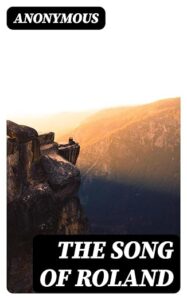 So, I settled in to read what I expected to be a rollicking saga from the Middle Ages, full of knights and treachery and invaders and revenge and ultimate victory.
What I got was names.
Whoever the author of The Song of Roland was, he made sure to include every name imaginable in the account. At times I thought it was a complete census of eight-century France.
Charlemagne. Marsile. Apollin. Blancandrin. Carlun. Clarun. Estramarin. Eudropin. Priamun. Guarlan. Machiner. Mahee. Jouner. Malbien. Roland. Oliver. Rollant. Gerin. Geriers. Oger the Duke. Turpin the archbishop. Richard the Old. Henry. Count Acolin. Tedbald. Milun. Guenes. Neimes. Basan. Besgun the cook. Godefroy. Hamon. Othon. Thierry. And the names go on. And on. Worse still, the names repeat in variations, adding a “s” here, an “ium” there. Here and there a title gets added.
Enough, already!
I struggled through about the first third of the work, and then I admitted defeat. I simply could not keep track of all the characters. It was if Charles Dickens time-traveled to medieval France and was allowed to people the landscape with as many names as he could imagine.

A battle scene from The Song of Roland
Not reading to surrender completely, I went looking. I found a translation into text instead of poetry. I appreciated the translation effort, but it did not help. I checked a few critical sources and discovered that the epic poem contains anywhere from 25 to 30 main characters and dozens – dozens – of minor characters or characters with a single reference.
I believe it. But I did feel better.
It may have been that the 11th century audience that heard or read the poem expected to hear references to all the characters. I could certainly imagine it being recited at court or during or after a royal dinner, listeners eagerly waiting to hear a mention of an ancestor.
But a contemporary listener might not have the same response. All those names!
Photo by Pai Shih, Creative Commons, via Flickr. Post by Glynn Young.

How to Read a Poem uses images like the mouse, the hive, the switch (from the Billy Collins poem)—to guide readers into new ways of understanding poems. Anthology included.
“I require all our incoming poetry students—in the MFA I direct—to buy and read this book.”
—Jeanetta Calhoun Mish

- When a Poem Completely Eludes You - October 8, 2026
- “Paul Celan: A Life” by Anna Arno - October 6, 2026
- Reading Paul Celan for the First Time - October 1, 2026
Leave a Reply