
Robert McDowell remembers 9/11 in poetry.
If you’re older than 29 tor 30, you know precisely where you were on Sept. 11, 2001. My wife was at home, our oldest son was in college, and our youngest son was in school. I’d gone early to my small office in downtown Kirkwood, Mo.
I turned on my small, portable television to watch the news. Instead, I saw a large passenger jet crash into the South Tower of the World Trade Center in New York. Another jet had crashed into the North Tower 18 minutes earlier. A little more than 30 minutes later came the crash into the Pentagon. And then the crash into the field in Pennsylvania.
Everything changed that day. Airline safety screening changed forever. A war started. The people who were the masterminds behind it were hunted down. But something deeper changed, something indefinable – the idea of the United States we carried in our heads.
Twenty-five years have passed. To remember that day, to remember the people on those planes and in those buildings, the policemen and firemen who gave their lives, and the families who lost loved ones, writer and poet Robert McDowell has written The Excellent Assembly. It’s a collection of 52 poems, not based on real people, but imagined to describe the types of people who died and were affected.
The collection is organized into two short sections and four longer ones. It’s bookended by two poems each in “One the Ground” sections. In between are the poems, the stories, of the people on the planes. Even now, 25 years later, it is very difficult to read these poetic stories. Emotion swells. Tears fall. But remembering is more than important; it’s vital.
McDowell tells us about pilots and co-pilots, flight attendants, regular business travelers, families, students returning home, grandmothers, artists and writers, retired couples, and more. He includes poems about the animals in the baggage compartment. I knew I was in serious emotional trouble by the time I reached the seventh poem, entitled “Little Girl.” Her mother is asleep next to her, holding her infant brother, while she smiles at the handsome man across the aisle, who gives her a stick of gum. He soon stands up and walks forward to a flight attendant, and then to the cockpit.
Later, another poem about a child is included.
God Baby
 In one month
I would celebrate
My first birthday.
My parents cry
Because I won’t
Ever be old.
They think that
I don’t know
What’s going on.
It comforts them
A little, but
They don’t realize
An infant sees
Everything, that for
A time we
Possess God-sight until
The portal closes.
I will exit
This body with
That sight intact.

Robert McDowell
We need poetry collections like The Excellent Assembly. We need to remember, to be reminded of what happened that awful day when terrorists guided airplanes into buildings, the day when Americans fought back, the day when our lives collectively changed forever.
Photo by A Peach, Creative Commons, via Flickr. Post by Glynn Young.
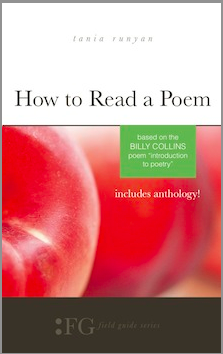

How to Read a Poem uses images like the mouse, the hive, the switch (from the Billy Collins poem)—to guide readers into new ways of understanding poems. Anthology included.
“I require all our incoming poetry students—in the MFA I direct—to buy and read this book.”
—Jeanetta Calhoun Mish
- “The Book of Joy: 100 Poems for Your Heart” by L.L. Barkat - October 27, 2026
- Poets and Poems: Betsy Mars and “Rue Obscure” - October 22, 2026
- Poets and Poems: Kortney Garrison and “The Fixed Hours” - October 20, 2026
Maureen says
Glynn,
I apologize for being so late in commending your review of Robert’s newest collection of poetry. Thank you so much for bringing these poems to attention, and for your choice of poem, “God Baby”, to highlight. I will be sure to add a note in the News & Events section of HLP’s website.
Thank you again!
Katie Spivey Brewster says
May we always remember.
Thank you, Robert and Glynn.