Gabrielle Myers uses landscape to translate relationship loss.
The end of a relationship with a spouse or partner is like a death – a death of familiarity, a death of structure, a death of how we live our lives and who we share that life with. I’ve never experienced that kind of loss, but I’ve seen it happen to close friends and family members.
Gabrielle Myers experienced that kind of loss, a relationship she ended after “five years of verbal abuse.” She did what many poets do – she turned to writing poetry to understand it, assimilate it, and resolve it –if such a thing can ever truly be resolved. But she did it in a rather unique way, by using the natural landscape around her to structure and explain her poems. And her loss.
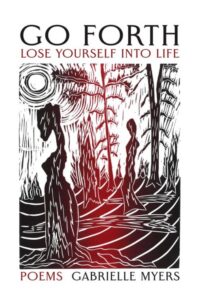
The result is Go Forth: Lose Yourself into Life, Myers’ fourth collection of poetry. It could also be subtitled with the words she uses to begin her introductory essay: “Begin to Know the World Again from Nothing.”
And the world she chooses in this natural world, the one we exist in and the one to which we’ll eventually return. For Myers, that world is the California world of mountains and deserts, streams and stands of pines, aspens and grasslands and the ever-present threat of drought and fires. It’s the world that can seem permanent until it isn’t.
Near the lake, stop in a large meadow interrupted by aspens;
 Their leaves green blushing to yellow, wind shaken.
Early autumn’s sun fixes just above Tallac.
Drying streams’ trickle last drops.
Sear us a new holding for what comes next.
Past’s pain, his words of anger
Shouldn’t take up more space
In our center than his phrases of love,
But they do.
We can’t shake “dumbass,” “retard,” “stupid,”
Even though we know we should—
A dyslexic’s secret fear confirmed.
Let still hot sun scorch
Memories like burned
Pine nubs dotting the marsh.
Grasses shove themselves upward,
Verdant in their reach, gathering, rising,
Making us forget fires that almost killed us.
That reference to fire is no accident; everything seems to have burned down when a relationship ends. “We are just two people again now, carved from each other,” Myers writes. The fire that burns everything down isn’t all bad; later she writes of clearing “the anger that was thrown at us.”
You can’t help but be pulled into what is a story of destruction, loss, escape, and healing. Some of the healing, at least, seems to come from the natural landscape, as if pulling from what is always there helps one find a center again. Insights arrive: “If you think of how you were wronged, deficits never stop accruing.”

Gabrielle Myers
Myers doesn’t end with the last poem of Go Forth. She’s looking beyond that; “this post-love ground pulses with relatable material.” She’s used the landscape to help her make sense of what happened, and now she’s looking forward, not backward.
Related:
Gabrielle Myers and Too Many Seeds.
Gabrielle Myers and Break Self: Feed.
Gabrielle Myers and Points in the Network.
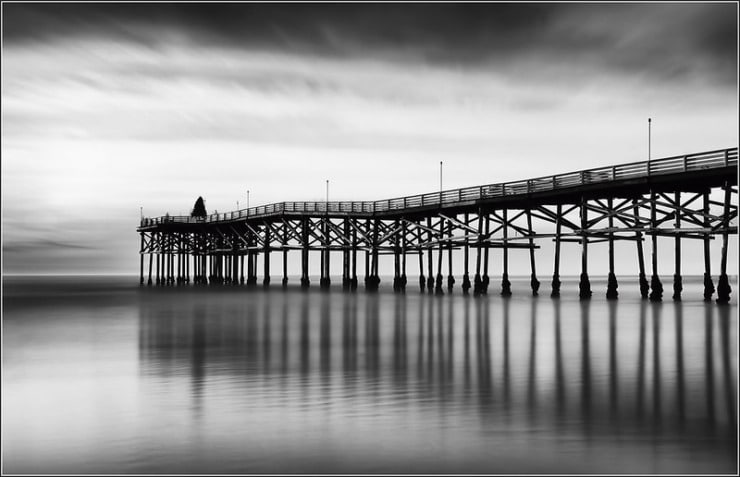
Photo by Rex Boggs, Creative Commons, via Flickr. Post by Glynn Young.

How to Read a Poem uses images like the mouse, the hive, the switch (from the Billy Collins poem)—to guide readers into new ways of understanding poems. Anthology included.
“I require all our incoming poetry students—in the MFA I direct—to buy and read this book.”
—Jeanetta Calhoun Mish

- Reading Paul Celan for the First Time - October 1, 2026
- Poets and Poems: Christian Wiman and “The Dance” - September 29, 2026
- Poets and Poems: James Tweedie and “Love Found, Yearned For, and Lost” - September 24, 2026
Leave a Reply