Diane Lockward edits a poetry anthology about color
I don’t recall where I read it, but some blogger or publication or Substack posted a poetry prompt: write about a color without ever mentioning the name of it. It’s both easier and harder than it looks. To make it more difficult, try writing a poem about a color with mentioning the color or an associated feeling or emotion.
An exercise like that does make you immediately aware of the importance color can have in poetry and even in everyday conversation. We feel blue. We see red. We’re in the pink. That potato salad made me feel green. His mood was black.
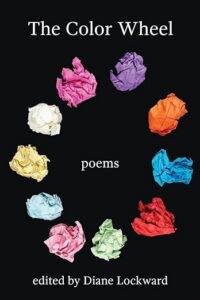
Poet, editor, and publisher Diane Lockward says she’s long had an attraction to poems that use color. Over the years, she kept a folder of poems that did exactly that. And then, she had an idea – an anthology of poems that make strategic use of color. She put out a call for submissions.
And poets responded. At least 117 of them did, and likely more, each by a different poet. And The Color Wheel: Poems was born. And the result is, well, more diverse and colorful than you might expect.
Yes, color is a feeling, and an emotion. It’s also a condition. It’s an experience. It’s a theory. It’s one’s self. A prayer. A surprise. It’s a season. It’s a fashion. A memory. An inheritance. A bedroom. It’s the Dionne quintuplets. A pair of shorts, an etymology, a lullaby, a banquet. It exists as a noun, an adjective, an adverb, and sometimes even an action verb.
The poets offering this color poems are the well-known and the lesser known. Color doesn’t have to be famous to be real. Kim Addonzio, Sydney Lea, Ted Kooser, and Edward Hirsch are here. So are several poets we’ve featured here at Tweetspeak Poetry, like Andrea Potos and Patricia Clark. One of the poems included is by Donna Hilbert, Tweetspeak’s 2026 Poet Laura.
Ode to Purple
By Donna Hilbert
 O how I love you, purple pen
given to me by Shannon, my friend:
fountain pen, sitting so prettily
between finger and thumb,
and within your chamber
mélange of red blood and blue
taking me straight to Big Hair
and purple skirts so long they graze
the top of my boots, and I shun undies
to be secretly naughty in public.
And back to the purple sweater
bought for yearbook photos,
ninth grade, at Orbach’s LA
taking a bus from West Valley
with savvy, smart, Ann from New York.
And further back to Mom,
who when re-doing my room,
refused my vision of purple walls—
excluding lavender, lilac, puce, no matter
my pleas, no matter my howls.
O eggplant, O plum, O yard full of iris,
O purple beanie crocheted by Aruni
O overblown phrases, and broken
and bruised, beating hearts.
Bring it all on! Because I swear
by the goddess of excess and beauty,
I freaking love you, Purple.
I’m still trying to imagine a desire for a bedroom full of various shades of purple. Let’s just say I’d vote with Mom. But I like the way Hilbert uses the color to describe the personality of herself as a young girl.

Diane Lockward
Lockward’s own poetry collections include The Uneaten Carrots of Atonement, Temptation by Water, What Feeds Us (which won the 2006 Quention Howard Poetry Prize), and Eve’s Red Dress. Her writing books include The Strategic Poet: Honing the Craft, The Practicing Poet: Writing Beyond the Basics, and The Crafty Poet I and II: A Portable Workshop. In addition to numerous anthologies, her poems have been published in a wide variety of literary journals and magazines, including Southern Poetry Review, Harvard Review, Prairie Schooner, Beloit Poetry Journal, and many others. In 2015, she founded Terrapin Books and serves as both editor and publisher. She lives in New Jersey.
Lockward’s assembling of these 117 poems demonstrates the multitude of ways color can be used in poetry. And it’s almost 117 ways. The Color Wheel is not a how-to guide, but it’s an important and useful work that would help anyone see poets’ remarkable use of color, how color can both amplify a poem and exist as a poem in itself.
Related:
Poetry Prompt: Color Palette & Aestheticism
What the House Knows: An Anthology by Diane Lockward
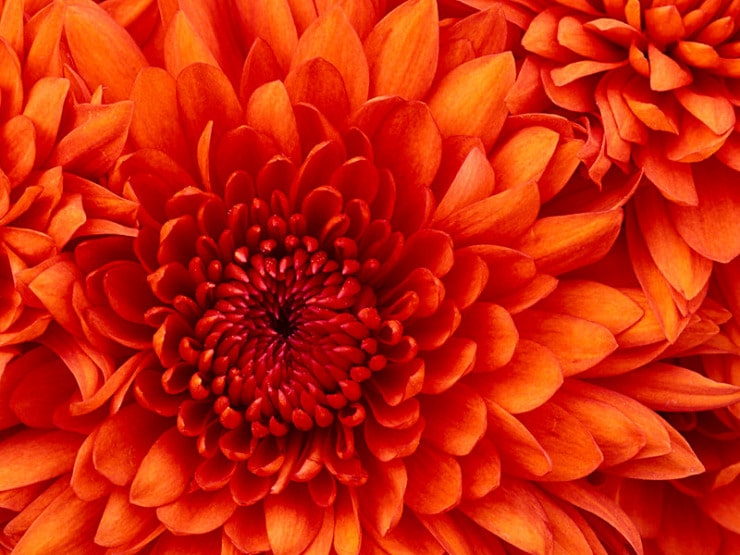
Photo by Chris Commons, Creative Commons, via Flickr. Post by Glynn Young.

How to Read a Poem uses images like the mouse, the hive, the switch (from the Billy Collins poem)—to guide readers into new ways of understanding poems. Anthology included.
“I require all our incoming poetry students—in the MFA I direct—to buy and read this book.”
—Jeanetta Calhoun Mish

- When a Poem Completely Eludes You - October 8, 2026
- “Paul Celan: A Life” by Anna Arno - October 6, 2026
- Reading Paul Celan for the First Time - October 1, 2026
Leave a Reply