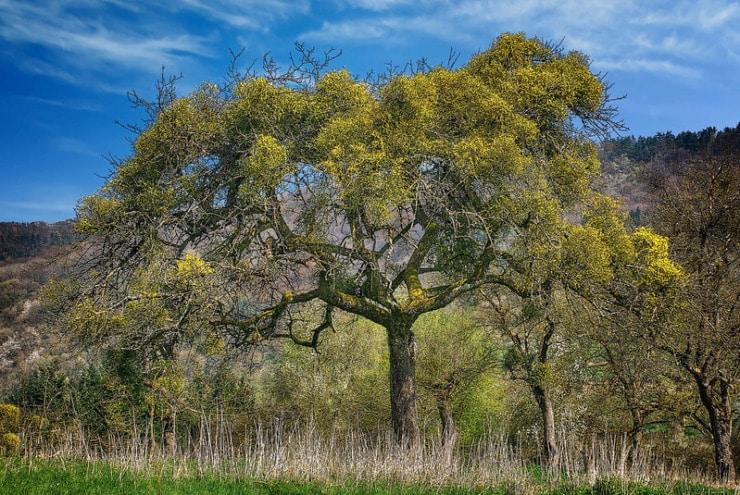
Friend of Madison and Jefferson, poet Philip Freneau kept re-inventing his life.
We learned this back in elementary school. If one poet’s name sits atop the poetry of the American Revolution, that name is Philip Freneau (1752-1832). And like the new nation he was part of, he kept re-inventing himself.
The Freneau family came from La Chappelle, France, in the Ardennes Forst and near the current Belgian border. The family was Huguenot, not exactly the best faith option in Catholic France. In 1707, Andre Freneau emigrated to New York in America and became part of the Huguenot colony there. He married and had five children. One of his sons, Pierre, became part of the family business married in 1748. His oldest child was born in 1752 and named Philip. Ten years later, the well-to-do family moved to New Jersey, although Philip remained in boarding school in New York. In 1768, aged 16, the boy entered Princeton University, set upon becoming a minister.
At Princeton, however, Philip discovered writing. He’d read widely in the English poets and Latin classics, and he was already composing poetry. In his class at Princeton was a young man who became a lifelong friend – James Madison. Freneau, Madison, and others were beginning to get up in the spirit of the times, and it was an anti-British, increasingly independent spirit. (In 1770, the senior class voted to wear only clothes of American manufacture for commencement.)
After leaving Princeton, Freneau became a schoolteacher in Maryland; he may have left that to study law in Philadelphia, but little is known about his life from 1772 to 1775. By 1775, however, his name was appearing in print as the author of poems supporting independence from Britain. We next find him on a cruise to the West Indies, during which the mate died and Freneau took his place. He worked on several voyages in the Indies, but he was still writing poetry. He sailed for home in 1778, but the ship was captured by the British. Being a passenger, he was allowed to leave and was put ashore.
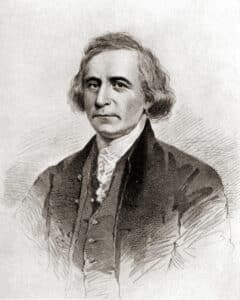
Philip Freneau
He continued to write poetry, including pamphlet poems supporting independence. In 1779, he became a contributor to the United State Magazine, published from Philadelphia by a former Princeton classmate. But he continued his interest in the sea, visiting the Azores and the West Indies. On one of these voyages, the ship was captured by the British and Freneau spent some time on a prison ship in New York.
After the War for Independence had been won, Freneau worked for the Freeman’s Journal (also known as the North American Intelligencer). He served as an editor and lived in Philadelphia, but he was soon back at sea. In 1786, his first collection of poetry was published. Another collection followed. In 1790, aged 38, he married Eleanor Forman of Middletown, New Jersey. He began another period of newspaper work, editing the Daily Advertiser.
He had been corresponding with Madison and Thomas Jefferson for some time, and it was as Secretary of State that Jefferson appointed him clerk for foreign languages in 1791, but Freneau turned down the offer, instead founding the National Gazette. Freneau would find himself on the Jefferson-Madsion side of politics when the conflicts with Federalists like John Adams and Alexander Hamilton sharpened. Freneau gained the reputation of something of a radical. President Washington was not an admirer.
After a few more years of tumultuous politics, Freneau retired to his farm in New Jersey, where he continued to write on politics and nature. He also became an abolitionist; the Matawan, N.J. post office has a plaster relief sculpture on its wall, depicting him with Black slaves. (It was created in 1939 as part of Franklin Roosevelt’s New Deal programs.)
Freneau’s writings are extensive; I read an ebook version of his Works that included three volumes of poetry and non-collected poems as well. Two poems often cited and for which he’s best known are The American Soldier and The Indian Burial Ground. This poem is one of his independence poems.
A Prophecy
 When a certain great king, whose initial is G.
Shall force stamps upon paper, and folks to drink tea;
When these folks burn his tea, and stampt paper, like stubble,
You may guess that this king is then coming to trouble.
But when a petition he treads under his feet,
And sends over the ocean an army and fleet;
When that army, half-starved, and frantic with rage,
Shall be coop’d up with a leader whose name rhymes to cage,
When that leader goes home dejected and sad,
You may then be assur’d the king’s prospects are bad:
But when B and C with their armies are taken,
This king will do well if he saves his own bacon.
In the year seventeen hundred and eighty and two,
A stroke he shall get that will make him look blue;
In the years eighty-three, eighty-four, eighty-five,
You hardly shall know that the king is alive;
In the year eighty-six the affair will be over,
And he shall eat turnips that grow in Hanover.
The face of the lion shall then become pale,
He shall yield fifteen teeth, and be sheer’d of his tail.
O king, my dear king, you shall be very sore,
The Stars and the Lilly shall run you on shore,
And your lion shall growl, but never bite more.
As a writer and poet, Freneau developed themes for which Ralph Waldo Emerson and James Fenimore Cooper would become famous. Freneau even influenced Edgar Allan Poe and the Transcendentalists. He’s not as well known today, but perhaps he should be. He was an acclaimed poet, friend (and political enemy) of many of America’s founders, and a vital voice for American independence.
Photo by A Peach, Creative Commons, via Flickr. Post by Glynn Young.


How to Read a Poem uses images like the mouse, the hive, the switch (from the Billy Collins poem)—to guide readers into new ways of understanding poems. Anthology included.
“I require all our incoming poetry students—in the MFA I direct—to buy and read this book.”
—Jeanetta Calhoun Mish
- Poets and Poems: Gabrielle Myers and “Go Forth: Lose Yourself into Life” - August 20, 2026
- Jon Nappa Imagines the Life of Longfellow - August 18, 2026
- Poets and Poems: Martyn Hesford and “Ash Light” - August 13, 2026
Leave a Reply