Linda Nemec Foster explores what’s behind the seemingly ordinary
A few weeks ago, I looked at Bone Country, the recent poetry collection by Linda Nemec Foster. It was like a travel guide to Europe, but not what you would expect from a travel book. She explores Europe through both real and imagined stories, and I came away with a strong sense of what the people and places are really about.
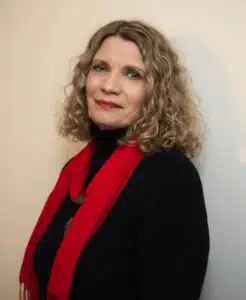
Linda Nemec Foster
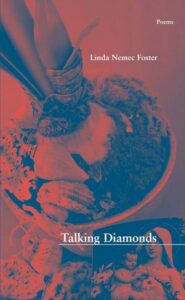
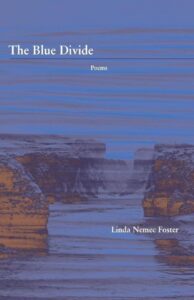
Since then, I’ve looked at two of Foster’s previous collections: Talking Diamonds, first published in 2009 and reissued in 2023, and Blue Divide, published in 2021 and republished in 2023. In both cases, the first publisher had closed its doors and the collections were reissued by Cornerstone Press of the University of Wisconsin-Stevens Point. It’s not difficult to see why. Both Talking Diamonds and Blue Divide are excellent, with sharp imagery, moving stories, and an original voice.
Talking Diamonds is composed of 48 poems on an array of subjects, many of them about family. Foster considers (or, as she writes, “enters”) her mother’s dementia. A field becomes a metaphor for a dying father. She sleeps in a room filled with the past. She parasails above the Pacific Ocean. She plumbs the philosophy of junk mail. She encases a Nativity scene in plastic wrap.
These poems are about their stated subject but also about something deeper. Foster is exploring what is below the surface, beyond what we see, and reaching to find meaning in the ordinary. In the process, she’s also asking what it is that makes us human.
Talking Diamonds
 Late at night, when dreams still live
inside us, you can hear a soft
noise like the quiet sound of
diamonds talking
about their lives underground.
Never are they bitter or angry. Nor do they
even curse those dark
memories of suffocating black. They know
every facet of their brilliance began as mere
coal—a mere dark fist waiting
for a chance to be something
other than ordinary.
Something hovering just under
the surface where anything and
everything can happen: talking diamonds,
rain becoming white orchids, ourselves awakening.
The 42 poems of Blue Divide span the space between Talking Diamonds and the poems about Europe in Bone Country. You can see Foster beginning to address Europe in poems about Croatia, Sarajevo, buying a lipstick in Warsaw in 1950, and visiting a café in Geneva. What becomes clear is that these poems, and those set in early and mid-20th century America, are flowing from what she knows of her family — the stories, the tales, the jokes, and the lived experiences.
As she explains it, her ancestors swapped the Tatra Mountains of Poland for the orange skies of the Cleveland steelyards. She writes of the immigrants of Slavic Village in Cleveland, the family tree, the Catholic faith her ancestors brought with them (her poem on Mary Magdalene is rather stunning), and her father on the first anniversary of his death. Those emigrant and immigrant experiences shaped generations, physically separated by the ocean.
The Water
 My mother hated it, my father loved it.
The ocean between them so vast
not even two daughters could bridge
the blue divide. For him, it was natural
to choose Navy (not Army) when everyone
went to war after Pearl Harbor exploded.
He hopped on a supply ship, learned how
to navigate using nothing but the night sky.
Made his way to Normandy, Anzio, north Africa—
and back again—all in one piece. Brought
home a thin blanket and his uniform
both filled with the smell of sweat. His wife
couldn’t wash it out; reminded of his ocean every day.
Foster has published 14 poetry collections, including The Lake Huron Mermaid, her most recent. Her books and poems have received numerous awards and recognitions, including a nomination for the Pulitzer Prize for The Blue Divide. Her poems have been published in such literary journals and magazines as The Georgia Review, Nimrod, North American Review, New American Writing, Witness, Quarterly West, and Paterson Literary Review. She served as the first poet laureate of Grand Rapids, Michigan, and is the founder of the Contemporary Writers Series at Aquinas College. She received her B.A. degree from Aquinas College and her M.F.A. degree from Goddard College in Vermont.
It’s easy to see why Cornerstone Press would want to keep these collections in print. All poets have a unique voice, but Foster blends family, ancestors, geography, and her own life in a moving, often riveting way.
Related:
Linda Nemec Foster and Bone Country
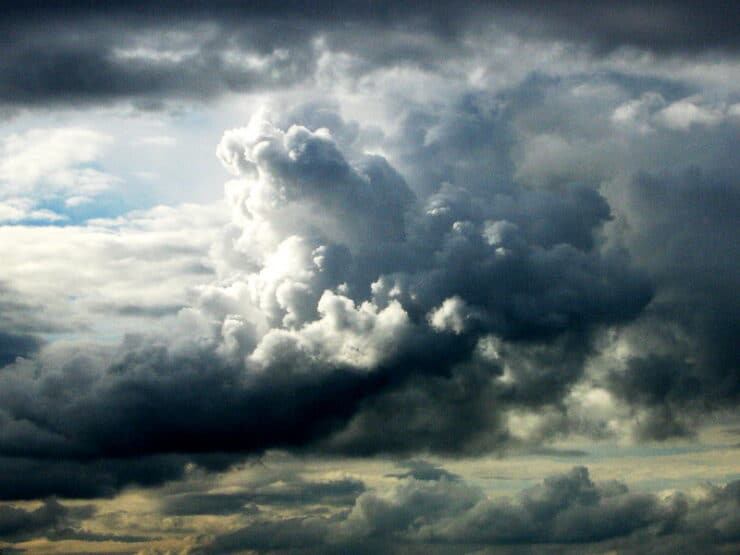
Photo by Sam Bald, Creative Commons, via Flickr. Post by Glynn Young.
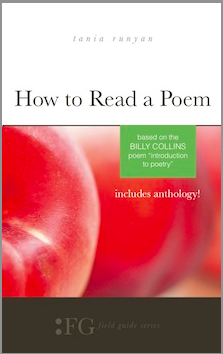

How to Read a Poem uses images like the mouse, the hive, the switch (from the Billy Collins poem)—to guide readers into new ways of understanding poems. Anthology included.
“I require all our incoming poetry students—in the MFA I direct—to buy and read this book.”
—Jeanetta Calhoun Mish
- When a Poem Completely Eludes You - October 8, 2026
- “Paul Celan: A Life” by Anna Arno - October 6, 2026
- Reading Paul Celan for the First Time - October 1, 2026
Maureen says
Why have I not already known about her? Thank you for bringing her poetry to us, Glynn.
Maureen says
Why have I not already known about her? Thank you for bringing her poetry to us, Glynn.
Katie Spivey Brewster says
So intriguing, once again my life is enriched by your writing. Looking forward to reading more of her work.
Glynn says
Thanks, Katie!