
Paul Krause writes poems inspired by the world’s great poets
The world’s great poets not only wrote poetry still read and studied today; they also helped to shape the culture of their countries and, indeed, what we call Western civilization. Consider the greats of Greece and Rome — Homer, Virgil, Ovid, and others. The great poets of English include Chaucer, Shakespeare, and Milton. Germany has its Goethe. Russia has Pushkin. And Italy has Dante.
Many others belong to the category of “great poets,” of course, but as poet and author Paul Krause points out in his Dante’s Footsteps: Poems and Reflections of Poetry, it was poets and their works of poetry who led the way in language, culture, and ways of thinking and expression.
One brief example cited by Krause: The Greek word agape is well known in historic Christianity as the highest form of love. It is love that is selfless, sacrificial, and unconditional. The word comes from the Greek, and it was Homer who first used it and, Krause says, perhaps invented it.

Paul Krause
Krause is editor-in-chief of the VoegelinView, an online arts and humanities published by the Eric Voegelin Society. When I first saw the society’s name, it struck a note in my mind: I should know this, or at least I should know who Voegelin was.
A quick search immediately explained my why it was familiar. Voegelin was an Austrian professor who fled Europe when Hitler came to power; he was an ardent anti-Nazi and would have been imprisoned if not killed had he stayed. He landed at my alma mater, Louisiana State University, where he taught from 1942 to 1958, and he was LSU’s very first Boyd professor, which was (and remains) the university’s highest teaching designation. LSU even established its own Eric Voegelin Institute in 1987.
Krause’s poems and essays reflect Voegelin’s teachings, which were dedicated to the study of political violence and devastation from totalitarian regimes. But they move well beyond the world of politics and embrace the traditions of Western civilization. Yes, Voegelin believed in “great books.” So does Krause. So do many of us involved in the reading and enjoyment of poetry.
The poems of Dante’s Footsteps are as much in homage to the great poets as they are inspired by them. Krause is writing in the Western tradition. One is tempted to place them within New Formalism, but they really reach back to the great poems (and poets) of earlier centuries.
He writes about seasons and nature. He includes ballads that tell stories. He writes about culture, including a wonderful poem about the destruction of Troy (“The Song of Aeneas”). He becomes metaphysical with poems inspired by Milton. And there’s the title poem:
Dante’s Footsteps
 I met a pilgrim as if by fate
While so far from Beauty’s grace.
Two shadows crossed on the sand
But I, face down, saw but land.
My heavy painful days never end
Trapped in darkness without friends,
Underneath rock and thunder,
Wailing screams without wonder.
Love ripped from my heart due to pride,
Heavenly steps crossed my side.
Theirs the walk of Love’s duty
Bringing forth light and beauty.
Echoes now of those footsteps weary
Climbing towards Mother Mary.
But I’m stuck in transgression
Eternally cut off from heaven.
The reflections or essays section of the work includes a discussion of Homer’s “epic of love,” “Virgil and the Christian Imagination,” and one with the intriguing title of “Dante in the Digital Inferno.” “In our digital age,” Krause writes, “Dante is once again journeying through hell. This time without Virgil as a guide of a literate audience knowing his references, allusions, and cultural inheritance.” A final essay discusses the politics of Romantic poetry.
Krause previously published Muses on a Fire: Essays on Faith, Film, and Literature; The Odyssey of Love: A Christian Guide to the Great Books; and Finding Arcadia: Wisdom, Truth, and Love in the Classics. He is a frequent writer on the arts, classics, literature, music, religion, and other subjects for newspapers, magazines, and journals.
Dante’s Footsteps is both a worthy work on its own and a reminder that we disregard or toss aside our Western culture and civilization at our peril. The great poets provided the intellectual and spiritual framework for our Western culture, and they continue to be worthy of reading, studying, and appreciating.
Photo by Lenny K Photography, Creative Commons, via Flickr. Post by Glynn Young.
Browse more book reviews
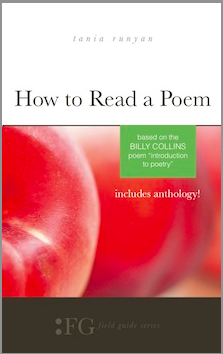

How to Read a Poem uses images like the mouse, the hive, the switch (from the Billy Collins poem)—to guide readers into new ways of understanding poems. Anthology included.
“I require all our incoming poetry students—in the MFA I direct—to buy and read this book.”
—Jeanetta Calhoun Mish

- When a Poem Completely Eludes You - October 8, 2026
- “Paul Celan: A Life” by Anna Arno - October 6, 2026
- Reading Paul Celan for the First Time - October 1, 2026
Leave a Reply