
Alison Luterman chronicles her past, her family, and life
It happens sometimes. You’re reading a poem, and the finely crafted words trigger a memory so powerful that you’re back in that moment of time. In this case, a poem about a young boy presenting a “stolen” begonia (or one snatched from a restaurant’s plantings) took me back more than 40 years. We were eating with our toddler at a Mexican restaurant when he decided to slip down from his booster seat, walk to a nearby table, and climb into an elderly man’s lap.
Mortified, we apologized, but the elderly man would have none of it. He was thrilled. He pointed to a younger couple seated at his table. “I keep telling them we’re waiting for our grandchildren.” He talked with our toddler for a few minutes, until our boy slid off his lap and came back to find a corn chip.
Many of the poems in Hard Listening by Alison Luterman prompt those kinds of memories. She has a poem about her husband in the emergency room; been there, done that. She swims a bit too far from the shore; yes, I did that, too, on a family vacation in Pensacola. Like most of us of a certain age, she considers how many times she’s been wrong in her life. She and I do part company, however, with a poem about hitchhiking. That’s one experience I never chose to have.
One experience we all shared was the craziness of 2020, when a sneeze at the grocery store could evoke a sense of panic, and we all seemed to be living in a fishbowl.
Fishbowl
 My friend who was out dancing the Saturday night
before everything changed,
stepping and spinning and dipping the ladies,
said the lockdown caught him by surprise.
I felt like a fish that was swimming happily in the ocean
that someone scooped up in a net
and plopped into a little fishbowl,
and I’ve been swimming in circles ever since,
banging up against that cold hard glass.
We’re walking by the marina six feet apart, his hair
grayer than I remember, mine too I’m sure.
Boats on their moorings; sea-beaten pilings.
“I want a house by a lake,” I say. “Where I can just
roll out of bed in the morning and go down to the water.”
“Now you’re talking,” he says,
which means we both know this will never happen.
But to be human is to be a monkey
with her paw caught in a jar of gilded peanuts,
stubbornly refusing to let go of anything—
not the old life which is surely
gone forever, nor of hope,
that half-wrecked container ship, laden with history
and dreams and plague-ridden rats no one knows about,
still chug-chugging toward the open harbor.
Some of Luterman’s poems are overtly political. My eyes tend to glaze when politics enters poetry, although I understand. I read a lot of poetry, and I read a lot about poets, and I find it personally painful to see politics of any kind slip into poems. Politics crowds out the beauty, and so many of the poems of Hard Listening are beautiful. “There are times when the worst / thing you could imagine / doesn’t happen,” Luterman writes in her poem “Good News.”Exactly.

Alison Luterman
Luterman goes on to write about music. She writes about Amy Winehouse, “that voice, black cauldron of inky fire.” And Billie Holiday: “Elegant as satin, intimate as breath.” She says the voice of Karen Carpenter “was as thrillingly low / as the hush of a Redwood grove.” She describes Aretha Franklin’s voice as “a bright spear of faith / hurled from the ramparts of circumstance.” Music informs or inspires many of the poems in the collection, especially in the last half, and they are among the very best I’ve read on musicians and performers.
Luterman began writing poetry at age 6 or 7, she says, and “has never stopped.” She studied poetry at Emerson College and the University of Massachusetts at Amherst. After a stint in VISTA, the Volunteers in Service to America, she moved to Oakland, California, where she worked in schools, directing musicals, teaching drama and poetry, and serving as an artist-in-residence for 20 years. She has written numerous plays and published several poetry collections, including The Largest Possible Life (2001), See How We Almost Fly (2009), Desire Zoo (2014), Feral City (2014), and In the Time of the Great Fires (2020). She lives in California.
Hard Listening is what its title says. Some of the poems are hard to listen to. All of them are well worth reading. I particularly loved the poems about music and musicians. And you will find yourself and your memories here.
Photo by seabamirum, Creative Commons, via Flickr. Post by Glynn Young.
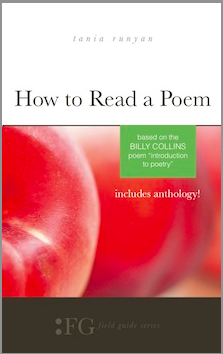

How to Read a Poem uses images like the mouse, the hive, the switch (from the Billy Collins poem)—to guide readers into new ways of understanding poems. Anthology included.
“I require all our incoming poetry students—in the MFA I direct—to buy and read this book.”
—Jeanetta Calhoun Mish
- Artists and Poems: Julian Peters and “Nature Poems to See By” - March 31, 2026
- Alan Jacobs Writes a Biography of “Paradise Lost” - March 26, 2026
- Poets and Poems: Marjorie Maddox and “Hover Here” - March 24, 2026
Katie Spivey Brewster says
Smiled at your telling of your toddler climbing into the elderly man’s lap and him being thrilled.
Thank you for sharing “Fishbowl” as well.
I agree with your statement that politics crowds out the beauty.