
Poet Patricia Clark explores nature, and life, with words
Self-Portrait with a Million Dollars, a poetry collection by Patricia Clark published in 2020, seems at first glance to be about nature. It includes poems about river birches, birds like hawks and mallards, gardens, moths, bees, spiders, the orca whale, and more. Even the poems not directly about nature touch upon the subject or theme in some way.
And yet, as you read and speak some of the poems aloud, you at first sense and then see that these are not nature poems. They may use nature as a subject, they may display nature in all its wonder and diversity, but they are definitely not nature poems. Nature may be the frame or the stage, but Clark is writing about life.
Even a poem like this one, which is about as close to a nature poem as you can get, is about something else again.
Ravine Idyll
 The sun-dappled ravine floor has a crunch to it.
Last year’s leaves break apart and down.
There is this day, cooler, with more of summer to come.
The sun-dappled ravine floor still flows green.
Last week I saw a doe and fawn lie down.
Not yet the turn, not yet a painted leaf.
The ravine floor has a supple give, good moist earth.
Paths cross it where fox and white tails walk.
Change in the air, this moment cannot last.
The charge: note what is here, what departs,
and do not fall to mourning, for this, or
us. In the meadow, goldenrod, fragrant when crushed.
Note the images Clark is using here: the sun-dappled ravine floor, the leaves breaking down, the doe and fawn resting, the “good moist earth.” They key to the poem is the ninth line — “Change is in the air, this moment cannot last.” Nothing in life, including nature, stays the same.
This is what Clark is writing about. She avoids the trite, phrases and aphorisms like “You can’t step into the same river twice” or “You can’t go home again.” Instead, she brings a freshness, a different kind of insight to the idea of change.

Patricia Clark
She considers a painting of a seascape by Claude Monet, “Les Rochers de Belle Ile,” pointing out that the scene always looks the same but even here, along this rocky coastline, change is at work, “erosion / of all the softest parts.” Or she watches her brother’s last son driving off the college, “leaving behind / Douglas firs, rocky beaches of Puget / Sound for Half Moon Bay, Bodega / Bay, and California sun. Will he return?” There it is: nature framing the change of life.
Clark has published seven poetry collections and three chapbooks.A former professor and poet-in-residence at Grand Valley State University in Michigan, she has won several poetry awards and prizes and was the poet laureate of Grand Rapids, Michigan. Her poems have been published in numerous journals and magazines, including The Atlantic, Gettysburg Review, Poetry, and Slate. Her poem “Astronomy in Perfect Silence” was chosen to go to the moon on the NASA / Space X Launch in 2024 as part of the Lunar Codex.
Life changes. Often it changes daily. Nature remains, but nature itself is always changing. The poems of Self-Portrait with a Million Dollars (a contender for my favorite poetry title of the year) underscore the idea of change, quietly explaining that it happens no matter how hard we may try to avoid it or hold it back.
Related:
Patricia Clark and O Lucky Day
Photo by Paul Van de Velde, Creative Commons, via Flickr. Post by Glynn Young.
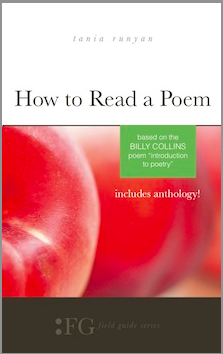

How to Read a Poem uses images like the mouse, the hive, the switch (from the Billy Collins poem)—to guide readers into new ways of understanding poems. Anthology included.
“I require all our incoming poetry students—in the MFA I direct—to buy and read this book.”
—Jeanetta Calhoun Mish
- Poets and Poems: Betsy Mars and “Rue Obscure” - October 22, 2026
- Poets and Poems: Kortney Garrison and “The Fixed Hours” - October 20, 2026
- Matthew Zapruder and “The Story of a Poem” - October 15, 2026
Katie Spivey Brewster says
Glynn,
The truth of your comment about Patricia Clark’s poetry: “Nature may be the frame or stage, but Clark is writing about life.” is certainly born out in this line of the last verse of her Ravine Idyll: “The charge: note what is here, what departs, and do no fall to mourning, for this, or us.”
Wisdom there.
Thank you once again for sharing a poet of substance and her work with us.
Gratefully,
Katie