David Livewell writes poems about what shapes a life.
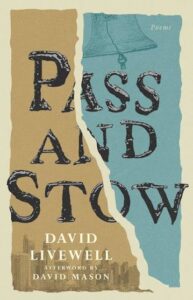
It was the title that attracted me to David Livewell’s new poetry collection, Pass and Stow: Poems. It sounded like something related to transportation or hauling freight. It turned out to be people’s last names.
As Livewell explains, John Pass and John Stow worked in the foundry in Philadelphia that recast the Liberty Bell in 1753. The foundry was in the same neighborhood where Livewell grew up in the 1970s. In his words, the two men “serve as reminders about the city’s layered past and what outward and inward repair can achieve.”
In the collection, Livewell applies the idea of layered past and repair to tell a story through poetry. And he is a grand storyteller.
If you begin with the question of what constitutes a life, you will understand that the answer becomes layered through childhood and adolescence, often punctuated by repair over time. Rather than excavate the layers, Livewell tells stories.
He begins with a class visit to the Liberty Bell during the Bicentennial in 1976. He examines old words used by city residents at the time of the American Revoluton. He moves on to archaeological exploration of native American villages. And then it’s into memories of childhood – school days, weather, neighbors, children’s street sports, family, and even the more recent COVID-19 lockdown. Two poems that especially resonate are about his mother’s nightly laying out of his father’s work clothes and how his grandfather, a good union man, almost always dressed regardless of the weather. Each poem becomes a layer of memory and experience, good, bad, and indifferent, but all shaping a life. The city of Philadelphia plays a critical role throughout, adding its grounding and its character.
Paet of the layering is poetry itself, and it’s not far into the collection where we begin to meet the poets important in Livewell’s experience: Robert Frost, Seamus Heaney, and Richard Wilbur. He considers a time when Heaney and Wilbur met and together visited the grave of yet another poet.
Two Poets at Hopkins’ Grave
 When Heaney hosted Wilbur,
They walked past dappled graves
In Glasnevin Cemetery,
Where rain pressed autumn leaves
On carved parentheses
And names. Their pace increased,
Joined in a sprung rhythm
To praise the poet-priest.
At the group plot, Heaney’s
Umbrella tapped a list
That wrapped the cross, one name:
Gerardus, easily missed.
Both told this tale to show
How poets intertwine.
Imagine their voices merging,
Reciting a chosen line:
Generations have trod, have trod, have trod…
In this weather of All Souls,
All three can walk again—
This time on air—their words
Still wet from a fountain pen.
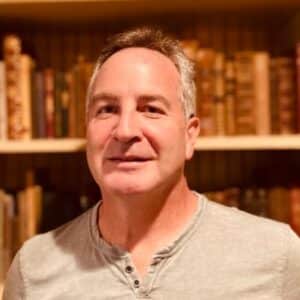
David Livewell
He layers in poetry with life experiences, deftly blended them until a coherent picture of a life, his own life, emerges.
Livewell, raised in Philadelphia, won the T.S. Eliot Poetry Prize in 2012 for his first collection, Shackamaxon. He also received a New Jersey Council on the Arts fellowship and the Dorothy Sargent Rosenberg Poetry Prize. His poems have been published in The Hudson Review, The Threepenny Review, Poetry, The Yale Review, New Criterion, The Sewanee Review, The Hopkins Review, and other literary journals. His poems have also been included in several anthologies. He teaches poetry at La Salle University and lives with his family outside Philadelphia.
Pass and Stow is a beautiful collection. Its poems are wonderfully constructed, reminding the reader of his or her own experiences, making the idea of the layering of a life as universal.
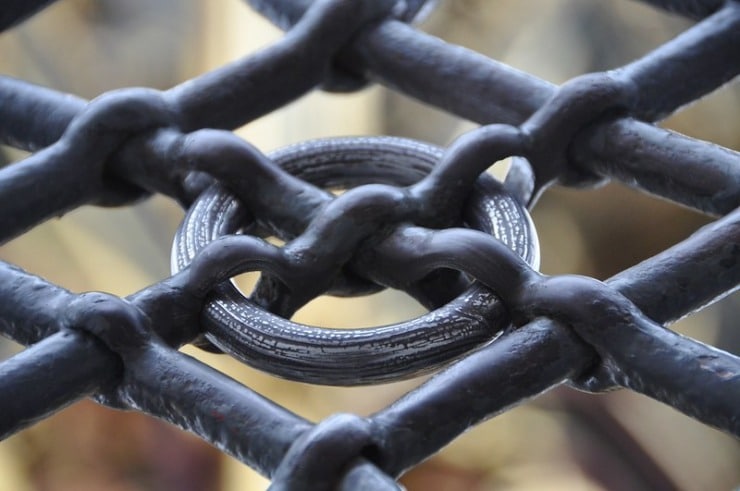
Photo by Marcus Meissner, Creative Commons, via Flickr. Post by Glynn Young.
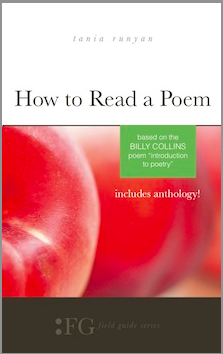

How to Read a Poem uses images like the mouse, the hive, the switch (from the Billy Collins poem)—to guide readers into new ways of understanding poems. Anthology included.
“I require all our incoming poetry students—in the MFA I direct—to buy and read this book.”
—Jeanetta Calhoun Mish
- Poets and Poems: Robert McDowell and “The Excellent Assembly” - September 10, 2026
- Poets and Poems: Rosemerry Wahtola Trommer and “The Wonderment” - September 8, 2026
- A Non-Personal Memory of Wendell Berry - September 3, 2026
Leave a Reply