
Baruch November explores the overhang of history on his Jewish faith and heritage.
More than 40 years ago, I discovered the stories and novels of Isaac Bashevis Singer (1903-1991). I don’t remember how I came across his work, but I found myself reading stories about a culture that had largely vanished, not long before I was born.
My understanding, if I had one of the Yiddish culture, had been shaped by a play that became a movie, Fiddler on the Roof, the story of Tevye, his wife Golda, and their daughters as they navigate the forces of modernism and anti-Semitism changing their lives. It’s set in the Jewish Pale of Settlement in Russia, around the turn of the 20th century. And then I read Singer’s stories, which not only provided a richer context than the movie but also made the culture seem more real. As much as I enjoyed the movie, it was Singer’s stories that showed the reality without the Hollywood framing.
As I started reading The Broken Heart is the Master Key: Poems by Baruch November, I was almost catapulted back to Singer’s stories. November’s poems aren’t about a culture that had almost disappeared; instead, they reflect the echoes of that culture, two generations after Nazi Germany destroyed it in Poland, eastern Europe, and western Russia. The poet’s relatives experienced the Holocaust, or had other family members who did, and their memories became a shaping influence on their grandson. It’s not insignificant that he’s named after his grandmother, Bracha, which is the Hebrew word for “blessing.”
He writes of blessings. He writes of growing up “too serious / about reading Hawthorne and listening to Leonard Cohen.” He tells stories, tales fringed with slight references to Yiddish folklore. He writes of “G-d,” adhering to the tradition of writing “YHWH” and not spelling out the name for God. He talks of the unsuccessful efforts to find a romantic “match.” And taking dance lessons. Scenes from New York and Israel. A student in a classroom making a comment about the Holocaust. And Hank Greenberg, the Detroit Tigers baseball player in the 1930s and 1940s who became the sport’s first Jewish MVP.
Those echoes of Yiddish culture, those stories and tales handed down from a vibrant culture that was almost erased, permeate November’s poems, no matter what the subject. Sometimes it’s subtle; sometimes overt. That cultural influence is present, almost a breathing thing, in what he calls the loudest language.
The Loudest Language
 The broken heart is the master key,
said the Baal Shem Tov.
Despair is the loudest language
in all worlds.
Ask the mother of the stolen seven-year-old girl.
Ask the widowed wives still in love.
Ask the newly dead as they look down.
Ask the soldier missing both arms.
The broken heart is the master key,
said the Chassidic master
to the shofar blower who lost
his page of mystical notations
& thought he had failed his task—
having blasted notes
like a simple,
broken man.

Baruch November
November’s previously published collections include Bar Mitzvah Dreams and Dry Nectars of Plenty. His poems have been published in The American Scholar, Lumina, Paterson Literary Review, Tiferet Journal, New Myths.com, and The Forward, among other literary journals and magazines. He’s taught Shakespeare, Multicultural American Literature, poetry, fiction, and creative writing at Touro University. He lives in New York City.
Yes, I hear echoes of Isaac Bashevis Singer in the poems of The Broken Heart is the Master Key. But I hear more. Singer was trying to memorialize a culture that had largely disappeared. November offers a reminder that the past is never really forgotten; it’s always with us.
Photo by Ken Xu, Creative Commons, via Flickr. Post by Glynn Young.
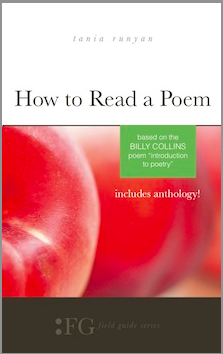

How to Read a Poem uses images like the mouse, the hive, the switch (from the Billy Collins poem)—to guide readers into new ways of understanding poems. Anthology included.
“I require all our incoming poetry students—in the MFA I direct—to buy and read this book.”
—Jeanetta Calhoun Mish
- When a Poem Completely Eludes You - October 8, 2026
- “Paul Celan: A Life” by Anna Arno - October 6, 2026
- Reading Paul Celan for the First Time - October 1, 2026
Leave a Reply