
Christian Wiman captivates with language
I hesitated before deciding whether to write about The Dance, the new collection of poetry by Christian Wiman. It wasn’t because I didn’t like; I did, enormously. It was more like the experience of entering the Anne Frank House in Amsterdam, or the little chapel in the crypt of St. Bride’s Church in London. You feel the weight of the experience and the inevitable silence, even in a crowded room.
With The Dance, you’ve stepped into a quiet that demands you listen without speaking.
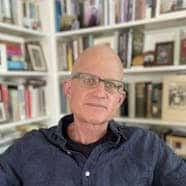
Christian Wiman
I’ve had this experience before with Wiman’s writing, both his poetry and his memoir, My Bright Abyss. That memoir was so intense that I needed three months to read it, sometimes only a paragraph or a page a day. I was reading it when I traveled overseas, and I deliberately left Christian Wiman home because I knew it would overshadow everything I was about to see on the trip.
I bought The Dance when it was published in July, and I knew enough about Wiman’s poetry to wait. I did not dive into it. I waited two months, waited for the right moment. That moment came just as summer finally made up its mind to leave, and the autumn cool began creeping in.
In case I’m not being clear, I’m saying that Wiman is one remarkable writer, and one remarkable poet. When I opened The Dance, I had high expectations. I was not disappointed.
This is Wiman’s introduction, without a title, to the new collection:
Emberling, amberman
worshiper of was
I asked the past
what I was meant to learn
and the past said
Burn
I can’t say Wiman writes about specific subjects or themes in these poems. He observes and embraces nature, to be sure. But I’ve learned that he writes on two levels, the obvious literal level and the level where something else is deeply embedded. Rather than anticipate, the reader better serves himself by participating, wading into each poem and then moving with its current.
Wiman captivates with language, like drinking tea in Marrakesh “so thick with mint / it conjures kelp.” or having “a vision of the vowels of doves / floating like snow in a common dawn,” or describing spring as “sunlight delighting itself on the winking creek,” or a hard rain that “glamours / the grass.” He writes what I might call experiential as opposed to other kinds of poetry. He doesn’t tell stories, even when a poem looks like a story, so much as he stages experiences. And those experiences become part of you.
I Was Where the First Leaf Stirred
 China sky, November’s neural trees,
clear clairvoyant morning.
Alert, alive, in dawn’s indivisible realities.
A gift. A warning,
Frosted hosta, a black trunk burled
like a half-melted candle, leaf-fall
in a locked embodiment of swirl.
A cosmic stillness over all.
Evaporates at the thought of God.
Implicates in the vise of mind.
Leaf-stir, lone bird (was it there?) pecking the hard sod.
Alone, apart, on the other side of shine.
Wiman is an essayist, translator, and poet. For ten years (2003-2013), he was the editor of Poetry Magazine. He’s published numerous collections of poetry; the celebrated My Bright Abyss: Meditation of a Modern Believer; the equally celebrated Ambition and Survival: Becoming a Poet, along with other essay collections; and a translation of Osip Mandelstom’s poetry, Stolen Air. And with Don Share, he co-edited The Open Door: One Hundred Poems, One Hundred Years of Poetry Magazine. He’s currently the Clement-Muehl Professor in Communication Arts at Yale Divinity School. He lives in Connecticut.
I’m still hesitating about writing this post. You read a collection like The Dance, a collection filled with words, images, and ideas, and you realize that anything you say will seem inadequate. And perhaps that’s the best way to describe it.
Related:
Christian Wiman and Once in the West
My reviews of My Bright Abyss and Every Riven Thing
Photo by Broo_am (Andy B), Creative Commons, via Flickr. Post by Glynn Young.
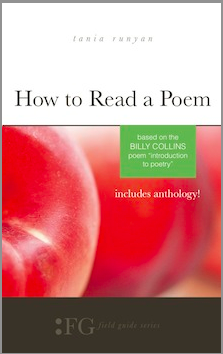

How to Read a Poem uses images like the mouse, the hive, the switch (from the Billy Collins poem)—to guide readers into new ways of understanding poems. Anthology included.
“I require all our incoming poetry students—in the MFA I direct—to buy and read this book.”
—Jeanetta Calhoun Mish
- The Early Poetry of Catherine Abbey Hodges - November 12, 2026
- Muriel Rukeyser: Protester, Political Activist, and Poet - November 10, 2026
- Poets and Poems: Paul Kingsnorth and “These Were the Stories of My People” - November 5, 2026
Leave a Reply