Seth Weick lives, and relives, experience in the Texas Panhandle.
We lived in Texas for five years. My job had me traveling all over the United States, but our home was in Houston. Texas is a big state, so we became familiar with only parts of it – southeast Texas, East Texas, Dallas-Fort Worth, Austin, the border area near McAllen, and South Padre Island. I had to travel several times to West Texas, flying into Midland and then traipsing all over the Permian Basin oil country to write stories. Later I would become familiar with the Hill Country southwest of San Antonio.
One area I never visited was the Panhandle. I’d read about it, intrigued by an eccentric millionaire named Stanley Marsh 3 (not the third) who’d had the Cadillac Ranch sculpture erected along Route 66 near Amarillo. It’s High Plains country. Wheat is grown there, as are corn, soybeans, and cotton. Historically, it’s been a major source of natural gas.
Its geography and people form the backdrop of Call Out Coyote: Poems, the new (and first) poetry collection by Seth Wieck. I don’t say this lightly, but this collection is a marvel of language and love for a geography and its people. I was enraptured.
A son strings barbed wire with his father in a poem that sound lie the opening of the Book of Genesis. Crops are named in another. A boy finding an arrowhead in the riverbed becomes a meditation on time. Childhood scars are remembered. A rattlesnake is discovered eating a rabbit. A local character who smokes Pall Malls, drives an El Camino, and chats with friends at the local garage meets his end at a train crossing. A prison inmate reads the Psalms in the King James Version of the Bible. Friday night high school football is almost a religion.
And then Wieck leaps to a painting by Jean-Francoise Millet, housed in the Musee d’Orsay in Paris, and figuratively transports it to the Panhandle.
L’Angelus (after Millet)
 The air distends, diffusing light and sound.
Our vespers announced ion bellsong. Crows rise
in timorous peal of wingflap, feather-
flushed messengers, evangels and vandals.
Our heads lean in, prayer prone, twin candle-
flames bent on breath—whence it comes—what breather
gutters our thoughts, then on throatwicks, gives words rise:
According to thy word. A shaped sound, round
as potatoes. Blind tubers die but don’t die
only sprout eyes and live their lives beneath the ground.
The same bent back which forks potatoes for the basket
will spade the hole for the casket of a child.
One of the most arresting poems in the collection is “Ulysses Arrives in Amarillo,” a 20-page mini-epic that tells the story of how Ulysses (yes, that Ulysses from The Odyssey) convinces the farmer Amos to sell his land to a real estate developer. How Wieck mixes Greek mythology and contemporary agriculture is a wonder. And “Mother’s Day Card at the Hundred-and-First Meridian” is one of the most beautiful contemporary loves poems that I’ve read.

Seth Wieck
Wieck grew up on a farm in Texas. He received a B.A. degree in English from West Texas A&M University and an MFA degree from the University of St. Thomas in Houston. He’s been a farmer, butcher, dishwasher, technical writer, copywriter, teacher, construction worker, and real estate appraiser. His poems have appeared in such publications as New Verse Review, Texas Poetry Assignment, Local Culture, Reformed Journal, Ekstasis Magazine, Fathom Magazine, among many others. She serves as a contributing editor for Front Porch Republic, and he’s also published short fiction and essays. He lives in Amarillo, Texas, with his family.
The cover and inside illustrations are by Jack Baumgartner, a pleasnt surprise because I’ve followed and admired his work for years. He’s a farmer, woodworker, artist, illustrator, musician, and puppeteer. His studio work can be found at The School for the Transfer of Energy, and he lives with his family on a farm near Wichita, Kansas.
Call Out Coyote is history, geography, culture, agriculture, people, and family. It is a love and respect for a place where one grew up and still lives. It’s an acknowledgement of hos geography and people shape each other. And it’s an outstanding poetry collection.
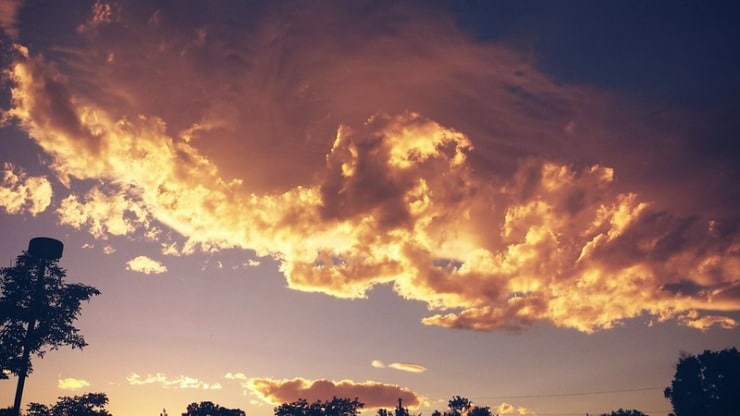
Photo by Amy Aletheia Cahill, Creative Commons, via Flickr. Post by Glynn Young.
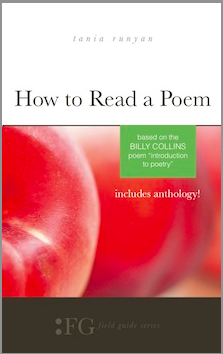

How to Read a Poem uses images like the mouse, the hive, the switch (from the Billy Collins poem)—to guide readers into new ways of understanding poems. Anthology included.
“I require all our incoming poetry students—in the MFA I direct—to buy and read this book.”
—Jeanetta Calhoun Mish

- Poets and Poems: Betsy Mars and “Rue Obscure” - October 22, 2026
- Poets and Poems: Kortney Garrison and “The Fixed Hours” - October 20, 2026
- Matthew Zapruder and “The Story of a Poem” - October 15, 2026
Leave a Reply