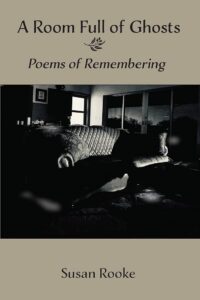
Susan Rooke explores the poetry of memory and memories.
Just recently, for some unknown and unprompted reason, a memory flashed from when I was eight or nine years old. I was visiting my grandmother in Shreveport for a summer week. I was sitting on the floor of her living room in the small frame house built by my grandfather and father. The front door opened, I looked up, and there stood what looked a younger version of my Aunt Rubye. I stared. She was equally taken aback; she was seeing the protective older brother she knew as a child.
The entrance of my grandmother from the kitchen broke the spell. She introduced us. It was my Aunt Ruth, barely if ever mentioned by my father. They hadn’t spoken in almost 25 years, and they wouldn’t for almost another 20, when she was diagnosed with an inoperable cancer.
My memory had been shaped and created by something that had happened some 15 years before that surprise meeting, and it would open into an extended story of how a brother and sister had fallen out. I would come to understand that every memory was its own story, and it didn’t have to be a story I was personally part of until that front door opened.
What likely put me in mind of that memory was A Room Full of Ghosts: Poems of Remembering, the 2025 collection by Susan Rooke. I had just finished reading it the day before the memory surfaced. Rooke recalls and explores memories, and not only from childhood. One’s memory can often be imperfect, as Rooke understands in her poems. Memory can amplify and distort, emphasize the good or the bad (or both), return you to a life that may or may not existed, or existed the way you remember. We can use memory to defend or protect, too.
Where do Rooke’s memories go? Try gar fishing in the Aransas River, a visit to the Mississippi Gulf Coast, a row of Chinese and Thai restaurants, father’s silk pajamas, a trip to Ecuador, and reading the newspaper’s obituary page. She includes a rather crazy trip (in a Cadillac) with her mother to visit cemeteries across Texas, and scenes from her own marriage, like a surprise vacation her husband somehow pulled off.
Another in a List of Things I Miss
 Those early days of transformation, when
you and I could conjure any future together, spinning
dreamsilk from sunlight shining through a window.
Like that glorious vacation you contrived for us,
the penthouse suite larger than our home,
the vast rooms and antique furnishings,
the parquet floors, the Steuben vases
spilling fragrant lilies, the stately grand piano
with its ivory promenade of untouched keys.
Neither of us played. The best we could manage
was to admire it. And when we strolled out
to the balcony, we gazed through raindrops upon
the mud-colored Mississippi, the tugs and barges,
while the city’s jazzy heart thumped twenty-seven floors
below us. On that humid, cloudy day, we marveled
at the heights we’d reached, the views such
heights afforded, our fortunate youth. It made me
dizzy to look down, and I had to back away,
fearful of a fall, but you stayed, broad hands steady
on the railing, staring downriver to the water/sky
horizon, a distant greyish smear I knew we’d reach
someday, but couldn’t bear to see face-on.
Tooke also writes what it means to grow up a minority Catholic in a largely Protestant community; I easily get that one, having grown up a minority Protestant in a largely Catholic city. She describes a house in Korea heated by charcoal briquettes below the structure, and a train ride in the Andes. She remembers her grandfather listening to the farm report on the radio.

Susan Rooke
Rooke has previously published several works of fiction and one poetry collection, Of Stars & Smoke: poems for the dark wane of the year. Her poems have been published in such literary journals, magazines and newspapers as Bellowing Ark, The Christian Science Monitor, Naugatuck River Review, San Pedro River Review, Westward Quarterly, and more. She’s also a photographer. She lives with her family in central Texas.
William Faulkner once observed that “the past is never dead. It’s not even the past.” A Room Full of Ghosts bears witness to that truth. It will also prompt you to consider your own memories and the impact the past has had on your life.
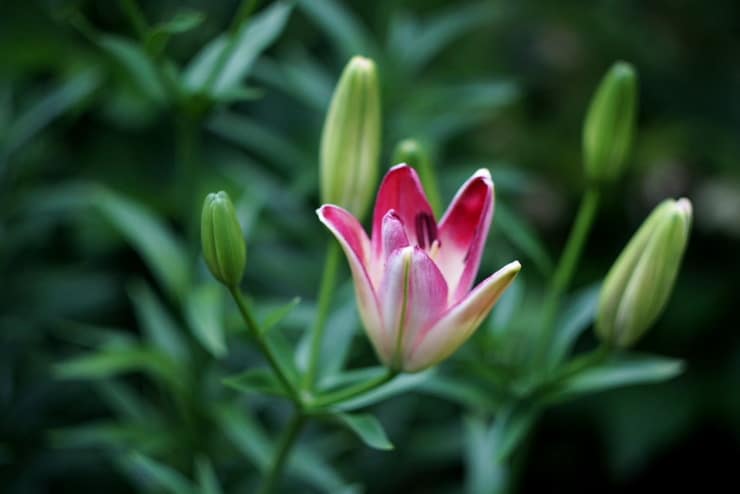
Photo by M’s photography, Creative Commons, via Flickr. Post by Glynn Young.
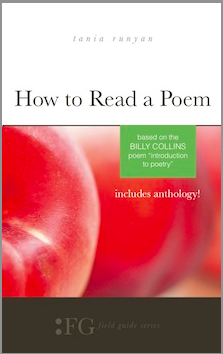

How to Read a Poem uses images like the mouse, the hive, the switch (from the Billy Collins poem)—to guide readers into new ways of understanding poems. Anthology included.
“I require all our incoming poetry students—in the MFA I direct—to buy and read this book.”
—Jeanetta Calhoun Mish

- Poets and Poems: Arlene Demaris and “Instructions for Use” - July 9, 2026
- Poets and Poems: Christy Lee Barnes and “Commodore Rookery” - July 7, 2026
- Philip Freneau: Poet of the American Revolution - July 2, 2026
Leave a Reply