
Robert Hudson provides a guide for all of us to write poetry.
It’s one of the most intriguing definitions of Poetry that I’ve read. “Poetry,” writes Robert Hudson, “is for people who have something genuine, heartfelt, interesting, or quirky to say.” He goes on to say who the intended audience poetry is: “It should be written for people who ride the bus, work the late shift, bag the leaves, or play vide games … people who send birthday cards, struggle with their weight, forget to take their meds, tuck in the kids, check Facebook, and drive the dog to the vet.”
And then he throws done the gauntlet: “…unless poetry makes sense to us ordinary folks, it’s not poetry. It’s just highbrow puzzle constructing.”
 Hudson’s The Art of the Almost Said: The Christian Writer’s Guide to Writing Poetry may be aimed at Christians, but’s a poetry how-to guide for all of us. Originally published in 2018 and revised this year, it’s not so much a deconstruction of what’s published as poetry today as much as it is a reclamation of what poetry once was and could be again. It hearkens back to the nineteenth century, when readers thrilled to The Charge of the Light Brigade and The Song of Hiawatha, when poetry books were often bestsellers, and newspapers and general interest magazines routinely and regularly published poetry.
What follows is one of the most resource- and example-packed works on poetry that I’ve read.
Hudson divides the guide into 20 chapters organized into four parts: preparations, unearthing poems, mysterious barricades, and finding the reader. Each chapter has a discussion, exercises, and resources. He pulls from poetry collections, radio programs, workbooks, artwork, and other sources.
Here is one Hudson’s exercises for making use of imagery and our senses: “Write a poem describing a color without ever naming the color. Use objects instead. To make it more interesting, trying doing what Anne Sulivan (Helen Keller’s teacher) did: describe a color to someone who has not been able to see since birth. All the other senses may be used, but no visual imagery is allowed.”

Robert Hudson
This is not an academic guide; it’s a common-sense, easy-to-follow approach to poetry for the rest of us. Hudson includes an extensive bibliography and footnotes. And it’s actually fun to read.
Hudson is the author of The Christian Writer’s Manual of Style, The Poet and the Fly, Kiss the Earth When You Pray: The Father Zosima Poems (2016), and Beyond Belief: What the Martyrs Said to God (2002). The Monk’s Record Player was published in 2018. He also serves on the board of the Calvin College Center for Faith and Writing, and he’s a member of the Western Michigan Thomas Merton Society and the Dante Society.
We all have some poetry within us. We don’t have to have a degree in poetry to find it. And if you’re wondering how to start, The Art of the Almost Said is informative, valuable, and useful.
Related:
Robert Hudson Explains the Housefly – and Poetry.
Robert Hudson: What Thomas Merton Had on His Record Player.
Photo by Joel Olives, Creative Commons, via Flickr. Post by Glynn Young.
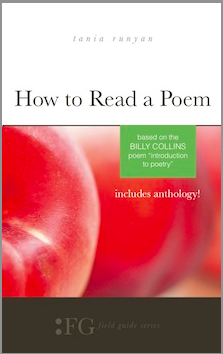

How to Read a Poem uses images like the mouse, the hive, the switch (from the Billy Collins poem)—to guide readers into new ways of understanding poems. Anthology included.
“I require all our incoming poetry students—in the MFA I direct—to buy and read this book.”
—Jeanetta Calhoun Mish
- Poets and Poems: Sarah Dickinson Snyder and “To Eve” - July 16, 2026
- Poets and Poems: Tina Kelley and “Field Guide to North American Words” - July 14, 2026
- Poets and Poems: Arlene Demaris and “Instructions for Use” - July 9, 2026
Leave a Reply