
Walt Whitman‘s Calamus poems are a collection of poems in Leaves of Grass dealing with the topic of gay love, or as Whitman puts it, the love of comrades or manly love. He’s written far too many good poems to choose from, but all of the poems below deserve to be in a collection of the top 5 queer Walt Whitman poems.
1. Behold This Swarthy Face
Behold this swarthy face, these gray eyes,
This beard, the white wool unclipt upon my neck,
My brown hands and the silent manner of me without charm;
Yet comes one a Manhattanese and ever at parting kisses me lightly on the lips with robust love,
And I on the crossing of the street or on the ship’s deck give a kiss in return,
We observe that salute of American comrades land and sea,
We are those two natural and nonchalant persons.
2. To a Stranger
Passing stranger! you do not know how longingly I look upon you,
You must be he I was seeking, or she I was seeking, (it comes to me as of a dream,)
I have somewhere surely lived a life of joy with you,
All is recall’d as we flit by each other, fluid, affectionate, chaste, matured,
You grew up with me, were a boy with me or a girl with me,
I ate with you and slept with you, your body has become not yours only nor left my body mine only,
You give me the pleasure of your eyes, face, flesh, as we pass, you take of my beard, breast, hands, in return,
I am not to speak to you, I am to think of you when I sit alone or wake at night alone,
I am to wait, I do not doubt I am to meet you again,
I am to see to it that I do not lose you.
3. These I Singing In Spring
These I, singing in spring, collect for lovers:
For who but I should understand lovers, and all their sorrow and joy?
And who but I should be the poet of comrades?
Collecting, I traverse the garden, the world—but soon I pass the gates,
Now along the pond-side—now wading in a little, fearing not the wet,
Now by the post-and-rail fences, where the old stones thrown there, picked from the fields, have accumulated,
Wild flowers and vines and weeds come up through the stones, and partly cover them—Beyond these I pass,
Far, far in the forest, before I think where I go,
Solitary, smelling the earthy smell, stopping now and then in the silence;
Alone, I had thought—yet soon a silent troop gathers around me;
Some walk by my side, and some behind, and some embrace my arms or neck,
They, the spirits of friends, dead or alive—thicker they come, a great crowd, and I in the middle,
Collecting, dispensing, singing in spring, there I wander with them,
Plucking something for tokens—tossing toward whoever is near me.
Here lilac, with a branch of pine,
Here, out of my pocket, some moss which I pulled off a live-oak in Florida, as it hung trailing down,
Here some pinks and laurel leaves, and a handful of sage,
And here what I now draw from the water, wading in the pond-side,
(O here I last saw him that tenderly loves me—and returns again, never to separate from me,
And this, O this shall henceforth be the token of comrades—this Calamus-root shall,
Interchange it, youths, with each other! Let none render it back!)
And twigs of maple, and a bunch of wild orange, and chestnut,
And stems of currants, and plum-blows, and the aromatic cedar,
These I, compassed around by a thick cloud of spirits,
Wandering, point to, or touch as I pass, or throw them loosely from me,
Indicating to each one what he shall have—giving something to each.
But what I drew from the water by the pond-side, that I reserve;
I will give of it—but only to them that love as I myself am capable of loving.
4. Meeting Again
When I heard at the close of the day how my name had been received with plaudits in the capitol, still it was not a happy night for me that followed;
And else, when I caroused, or when my plans were accomplished, still I was not happy.
But the day when I rose at dawn from the bed of perfect health, refreshed, singing, inhaling the ripe breath of autumn,
When I saw the full moon in the west grow pale and disappear in the morning light,
When I wandered alone over the beach, and undressing bathed, laughing with the cool waters, and saw the sunrise,
And when I thought how my dear friend, my lover, was on his way coming, O
then I was happy;
O then each breath tasted sweeter—and all that day my food nourished me
more—and the beautiful day passed well,
And the next came with equal joy—and with the next, at evening, came my
friend;
And that night, while all was still, I heard the waters roll slowly
continually up the shores,
I heard the hissing rustle of the liquid and sands, as directed to me, whispering, to congratulate me;
For the one I love most lay sleeping by me under the same cover in the cool night,
In the stillness, in the autumn moonbeams, his face was inclined toward me,
And his arm lay lightly around my breast—and that night I was happy.
5. I Hear It Was Charged Against Me
I hear it was charged against me that I sought to destroy institutions,
But really I am neither for nor against institutions,
(What indeed have I in common with them? or what with the
destruction of them?)
Only I will establish in the Mannahatta and in every city of these
States inland and seaboard,
And in the fields and woods, and above every keel little or large
that dents the water,
Without edifices or rules or trustees or any argument,
The institution of the dear love of comrades.
—Walt Whitman
Photo by Raimond Klavins, Creative Commons, via Unsplash.
About the Poem Curator
Sara Barkat is the author of the novel Otherside, which explores the existence of those who live “in between” culturally and societally.
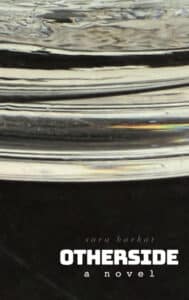
a novel that frames itself using “the rime of the ancient mariner”

- Top 5 Queer Walt Whitman Poems - June 8, 2026
- Good News—It’s Okay to Write a Plot Without Conflict - December 8, 2022
- Can a Machine Write Better Than You?—5 Best (And Worst) AI Poem Generators - September 26, 2022
Leave a Reply