
Paintings by Anselm Kiefer led directly to a Beat poet

In 2014, I was in London, and I’d just recovered from my back going out and spending a good 24 hours immobilized on the floor of our hotel room. A house doctor was called in, and he gave me a muscle relaxant via hypodermic. My back “felt like a solid brick,” he said. It took about 10 hours to work, but I could finally start moving around again.
The floor of a hotel room is not the way to experience London. The maids were, however, very polite as they vacuumed around me.

Anselm Kiefer
Two days later, I was moving normally again, and I went to see an exhibition at the Royal Academy. I’d heard of the German artist Anselm Kiefer; the St. Louis Art Museum has two of his works. One is a massive painting called Fuel Rods. The other is a sculpture, entitled Breaking of the Vessels, comprising a huge shelf of burned books and thousands of pieces of glass scattered on the floor. It commemorates “Kristallnacht,” or the “Night of Broken Glass,” when German Nazis attacked Jewish businesses, buildings, homes, and people across Germany on Nov. 9-10, 1938.
The London exhibition was simply entitled “Anselm Kiefer.” It included many of the paintings he’d done in the late 1970s and early 1980s — among the first cultural efforts to force Germany to confront its Nazi past. The paintings themselves were a somber revelation, including one of a railroad track that (presumably) leads to Auschwitz. You don’t simply walk through an exhibition like this one. You almost live it. The quiet in the crowded galleries was akin to the quiet I experienced at the Anne Frank House in Amsterdam.
I was bowled over, by the exhibition and the artist.

One of the paintings in sculpture Hall
Last month, some 14 years later, my wife and I went to the St. Louis Art Museum to see art by Anselm Kiefer once again. “Anselm Kiefer: Becoming the Sea” is almost overwhelming. Many of the paintings are huge, including five exhibited in the museum’s largest space, Sculpture Hall.
We started in the main exhibition galleries, surprised that there was no charge. In the second room, I walked into ekphrastic art — a large painting for the poet Paul Celan, one of two dedicated to him in the exhibition. (Kiefer has long been taken with Celan; over many years, he’s done a whole series of paintings connected to him and his poetry.)
This current exhibition is about the sea and the rivers leading to it. Some of the paintings feature the Rhine; for this exhibition, Kiefer created several about the Mississippi. I met one of the “river paintings” in a large room; it quotes the American Beat poet Gregory Corso. In fact, the title for the entire exhibition comes from a poem by Corso:
Spirit
Spirit
is Life
It flows thru
the death of me
endlessly
like a river
unafraid
of becoming
the sea

“Becoming the ocean” by Anselm Kiefer
Corso (1930-2001) has one of the more unusual biographies for a poet. His parents were teenagers; his mother abandoned the family in New York and returned to Italy. He grew up in foster homes and orphanages, and spent several months in prison when he was 12, even a stretch for observation at Bellevue Hospital. He went back to prison for theft when he was 16, and he began to read classic literature. He worked as a laborer, then as a newspaper reporter, before he signed on as a sailor. Corso met Allen Ginsberg in New York, and that began his connection to the Beat poets.
If you read Corso’s poetry collections like Gasoline (1958) or Elegiac Feelings American (1970), you can see Ginsberg’s influence as well as Walt Whitman’s. Corso wrote in Whitman-esque lines reminiscent of “I Hear America Singing.”
The above poem, “Spirit,” is inscribed on Corso’s tombstone in Rome; he’s buried very near the grave of Percy Bysshe Shelley, a poet he studied.
And here he was, showing up in two paintings in the Kiefer exhibition.

“For Gregory Corso” by Anselm Kiefer
“Becoming the ocean” was painted in 2024, one of the works created specifically for this exhibition. The second one, in Sculpture Hall, is simply “For Gregory Corso,” painted over the period 2021-2025. Lines from the “Spirit” poem are included, the words painted across the top. Like the other paintings in the hall, it’s huge (the guidebook says “monumental”). Most of the paintings in the entire show are large, but the five in Sculpture Hall are overwhelming.
Kiefer’s paintings are multilayered in meaning. I’ve seen the Sculpture Hall group twice, and each time I find myself being pulled in deeper. In that sense, they’re like poems you keep returning to, trying to understand what’s fully there, surprised that each time is like a new experience.
The exhibition continues until Jan. 25. And, yes, I will be going back.
Related:
Anselm Kiefer: Becoming the Sea – Jeanette Cooperman at The Common Reader.
St. Louis Art Museum’s Kiefer connection goes back decades.
Art Matters: Asking the Questions No One Can Ask.
Photo by Anton Vakulenko, Creative Commons, via Flickr. Post by Glynn Young.
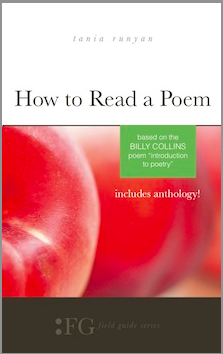

How to Read a Poem uses images like the mouse, the hive, the switch (from the Billy Collins poem)—to guide readers into new ways of understanding poems. Anthology included.
“I require all our incoming poetry students—in the MFA I direct—to buy and read this book.”
—Jeanetta Calhoun Mish
- Poets and Poems: Linda Nemec Foster and “Amber Necklace of Gdansk” - April 2, 2026
- Artists and Poems: Julian Peters and “Nature Poems to See By” - March 31, 2026
- Alan Jacobs Writes a Biography of “Paradise Lost” - March 26, 2026
Leave a Reply