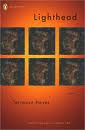
 To read Lighthead: Poems by Terrance Hayes is to enter a world that’s distinctly uncomfortable, almost jarring, as if the familiar has become dislocated. Perhaps it’s like experiencing lightheadedness, except it’s experiencing it as a state of normal. And you know this from the beginning of this collection of poems: “Ladies and gentlemen, ghosts and children of the state, / I am here because I could never get the hang of Time. / This hour, for example, would be like all the others / were it not for the rain falling through the roof. / I’d better not be too explicit…”(from “Lighthead’s Guide to the Galaxy”).
Time in these poems, for example, is itself not so much relative as tenuous, as if it’s always slipping away or defined by other tenuous and temporary things. In a related poems group entitled “Three Measures of Time, ” his brother tells time by food (“The past is nutritious; the past is there on the table / with the hair you know is Ma’s color…”); his father tells time by smell (“The smell / of barbeque in a sentence, the scent / long gone flat as money”)’ and his mother by “none of the hours jumping at the window. /By the joblessness of God and the body / beneath a floral bedsheet…”
Place, too, is something ephemeral, as in “Fish Head for Katrina:”
The mouth is where the dead
Who are not dead do not dream.
A house of damaged translations
Task married to distraction
As in a bucket left in a storm
A choir singing in the rain like fish
Acquiring air under water
Prayer and sin the body
Performs to know it is alive
Lit from the inside by reckoning
As in a city
Which is no longer a city…
 In “Carp Poem, ” the poet is visiting the New Orleans Parish Jail to meet with 20 prisoners to talk about…poetry. As the poet walks by the cells, the prisoners become like fish in a pond, each prisoner’s orange jumpsuit become the gold scales of the carp. Even prison is not what it seems to be.
There are other ways to slice Hayes’ poems – through the filters of race, gender, experience, even age. But the tenuousness of life is what “Lighthead” seems to be most about, a tenuousness rendered with grace.

- Poets and Poems: Sarah Dickinson Snyder and “To Eve” - July 16, 2026
- Poets and Poems: Tina Kelley and “Field Guide to North American Words” - July 14, 2026
- Poets and Poems: Arlene Demaris and “Instructions for Use” - July 9, 2026
Kelle Sauer says
I’m not sure I would read this one in the place I am now – I prefer poetry a little more grounded. But if I was looking for new perspective, I would like to read “tenuousness rendered with grace.”
Good review.
Kathleen says
Words with the power to disturb and give shivers. What a unique paradigm he has.
n. says
thank you for this look into another poet.
Maureen Doallas says
A week or so ago I saw a video of Hayes giving a reading. He’s quite funny and a wonderful reader. He’s also quite a fine poet.