
Poet Tania Runyan is one of our top-selling authors. She is also fabulous to work with, fun, and funny. We thought you might enjoy sitting in on our recent conversation with her…
Tweetspeak Poetry (TSP): How many books have you written? Which was the easiest to write? Which was the hardest?
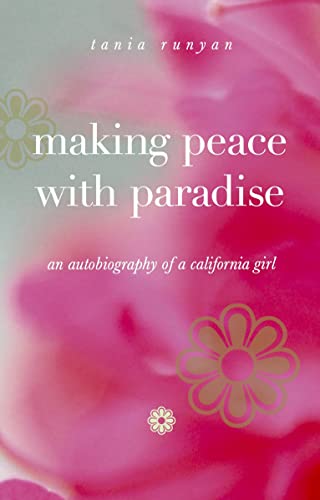
Tania Runyan (TR): I’ve written and published 10 books, with an unpublished chapbook and full collection looking for homes. Each book had its own ups and downs during the writing process, and some, while not necessarily harder to write, took more time. My “How-to” books, for example, came together fairly quickly as far as the writing goes; however, seeking out poems and getting permission to print them proved to be long and complicated! Making Peace with Paradise came together after several years of writing essays, conducting research, and revising/grouping/cutting material. What Will Soon Take Place, my collection of poetry based on the book of Revelation, was difficult in terms of content. However, the process felt “easier” than most, as I was just writing my way through Revelation, chapter by chapter, in order. That plan kept me focused and on track.
When it comes to writing, nothing is really easy! That’s one of the reasons I enjoy it.
When it comes to writing, nothing is really easy! That’s one of the reasons I enjoy it.”
TSP: You’ve done a lot with poetry. What inspired you to try memoir?
TR: Back in the 2010s, I wrote essays regularly for Image Journal’s blog, Good Letters. I enjoyed the opportunity to write prose, and I discovered that I preferred that genre for processing some of my earlier memories. In fact, during much of my essay-writing phase, I was also receiving treatment for PTSD. Creative nonfiction gave me a place to let some of these images “simmer” while I reflected more explicitly than I normally do in poetry.
TSP: Could you give a new author some tips?
TR: Read like crazy, and prioritize your life around the literary community. I cannot stress this enough. And I don’t just mean “networking,” but making actual friends with writers because you value them and what they have to say. You value their calling because you have the same. Don’t just gather names and blitz people with marketing materials. There’s nothing wrong with marketing; we writers have to do it! But it’s pretty obvious when people try to connect merely for their own gain. Once you really start forming those relationships, you’ll care about the people more than the books. That’s when you know you’ve found a true community.
TSP: Vice versa, could you give a seasoned author some tips?
TR: Write because you love writing, regardless of the outcome. If you’re writing for publication or recognition but don’t actually enjoy the time at your notebook or keyboard, why do it? Life is short. It’s okay to take breaks, change things up, or even set writing behind for good if it has ceased to bring you purpose and joy.
Life is short. It’s okay to take breaks, change things up, or even set writing behind for good if it has ceased to bring you purpose and joy.”
TSP: You’ve done other jobs, but you always seem to come back to being a poet & writer. Could you explore that dynamic a bit with us?
TR: Writing, and poetry in particular, has been the constant my entire adult life. (I’ve been a creative writer since around age 7, but I didn’t come to poetry until around 17.) I’ve done just about every writing/lit job imaginable: teaching, tutoring, publishing, editing, curriculum writing, content writing. Those jobs have come in and out of my life when I’ve needed them, and I’ve loved them all (mostly). But poetry just feels the most “me” of all; it’s where I feel the most alive, even when the writing is difficult. And pays, um, close to nothing.
TSP: If you were given the job of helping someone craft “a room of one’s own,” what would you suggest they put in it?
TR: I require blankets, two Boston terriers, coffee, music, and a beautiful view. I *try* to set the phone aside, but I don’t always have a choice, depending on what’s going on in my life. I am decidedly not a desk person and prefer to sprawl out, whether that be on a couch or my outdoor daybed. Of course, I also appreciate a change of setting occasionally, such as a library or coffee shop. Those spots are usually dog-and-blanket free.
So I guess I would say, figure out what makes you most comfortable and prioritize having those spots or items available, even if that means changing your furniture arrangements and decor to make your space more conducive to writing. And it doesn’t have to be fancy. I wrote my collection A Thousand Vessels almost entirely atop a red IKEA ottoman tucked away on the landing in my townhouse.
About the Poet
Tania Runyan’s friendly instructional guides, How to Read a Poem, How to Write a Poem, How to Write a Form Poem, and How to Write a College Application Essay, are used in classrooms across the country. She is also the author of Making Peace With Paradise: An Autobiography of a California Girl. Her poems have appeared in many publications, including Poetry, Image, Harvard Divinity Bulletin, The Christian Century, and Saint Katherine Review. Tania has been awarded an NEA Literature Fellowship.
Photo by Jonathan Borba, used via Unsplash license.

- Blankets & Boston Terriers: Interview with Tania Runyan - August 3, 2026
- New Video! — Brookhaven | Civil War Novel + Prompt - June 29, 2026
- Bringing Characters to Life—1 - June 15, 2026
Leave a Reply