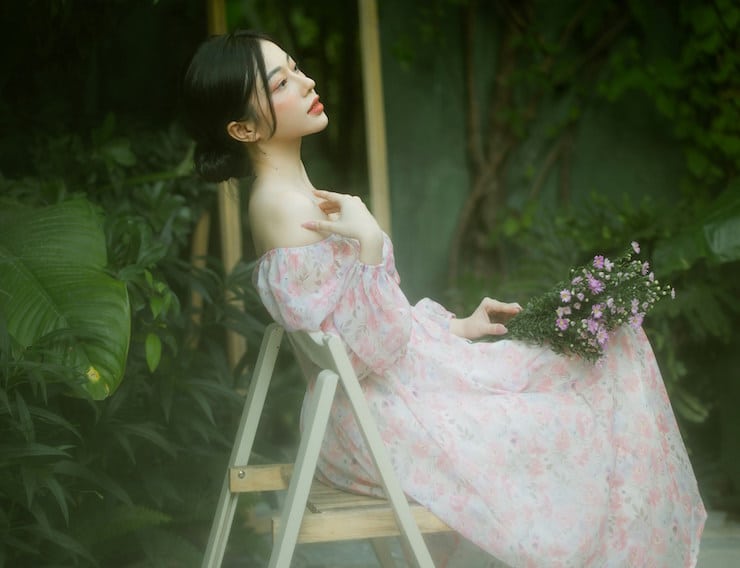
Our new monthly theme is Letters. Perfect for introducing you to one of your inspirational muses, Terpsichore.
Terpsichore was, according to Apollonius of Rhodes, the mother of the sirens. Not these sirens, who sound suspiciously like the kind of siren no driver ever relishes hearing:
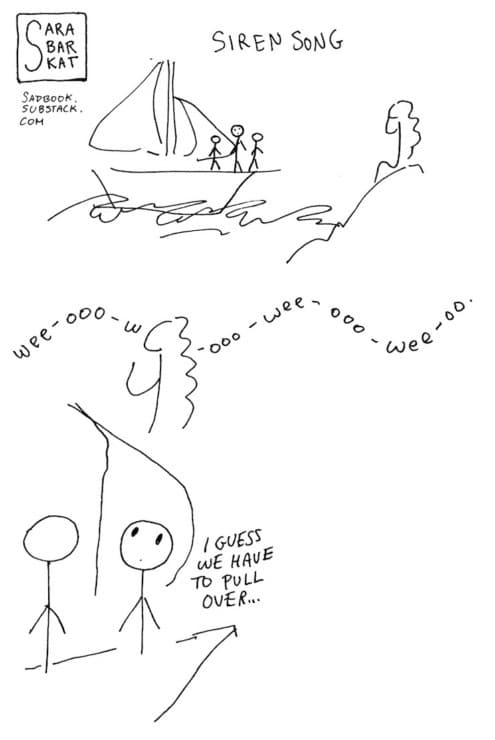
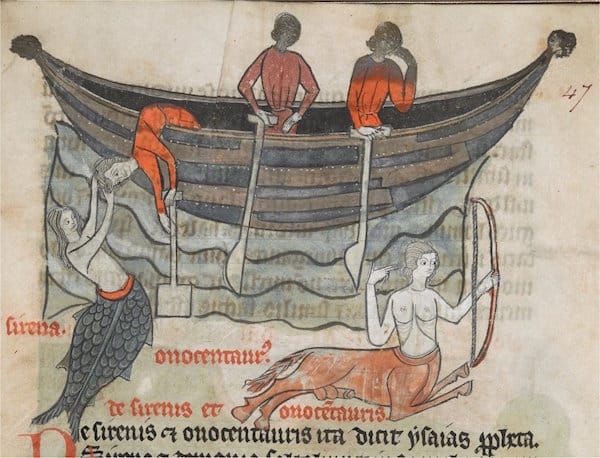
Rather, Terpischore had to raise these sirens (and one wonders what they did to get an endless timeout on that island! Maybe it was the hair-pulling that the bestiary caught in action?):
No matter. Terpischore had an otherwise delightful life being the goddess of dance and chorus. For this, she got to hold a lyre (and play it, of course).
Now, it’s not every goddess who gets an opera prologue in her name. (Summary from Wikipedia: “Erato, muse of lyric poetry, and her followers, call on Apollo, who descends from heaven with some of the Muses. They summon Terpsicore, who gives a demonstration of the power of dance, illustrating diverse emotions through use of movement. Solo singers and chorus join together to praise the virtuous deeds of wise men that are going to be celebrated in the ensuing opera.”)
Thank you, Handel.
Or, you could take Rita Hayworth’s musical viewpoint on Terpsichore, “I put the ants in the dancers’ pants.” (Hmm, maybe the sirens got their mischief from Mom?)
Poetry Prompt
Explore inspiration through movement, the physicality of writing. Begin by writing a letter to someone, however brief. Then craft a poem about the experience. Consider tucking something in about the sirens or their mother Terpsichore, if you can find a way.
Photo by Hoai Thanh, Creative Commons, via Unsplash.

- The Beachy Poem Challenge - July 13, 2026
- 10 Things Poets & Writers Can Do with the Small Moments - July 6, 2026
- Poetry in Prose—Where Love Is Born - June 22, 2026
Glynn says
A Street Named Terpsichore
A flat tire introduced me
to the sirens and their mother.
Before I knew Terpsichore
as a muse or the mother of sirens,
I knew her as a street, relatively
residential, nineteenth century
homes, called shotgun houses,
stringing each room in succession,
front to back, because properties
were taxed on width, not depth.
Imagine a street of homes,
sometimes duplexes, with
living room-bedroom-bathroom-
bedroom-dining room-kitchen-
back porch, a long house shaped
the like barrel of a shotgun.
Terpsichore had sister streets, all
comprising the Faubourg Lafayette
and Lower Garden District of
the Big Easy. You walked streets
named Erato, Calliope, Clio,
Thalia, Melpomene, Euterpe,
Polymnia, and Urania, and
Terpsichore (of course),collectively
issuing their siren calls to come
home. My personal favorite was
Erato, named for the poetry muse,
because I had a flat tire in a station
wagon on the interstate right
at the St. Charles Avenue exit,
and I guided our car full of teenagers
bound for the French Quarter down
the exit ramp, carefully, parking
on a street named Erato. I fixed
the flat, not knowing that decades
later, that Erato and her mother
Terpsichore would remind me
of a flat tire.
L.L. Barkat says
This is SUCH a fun poem, Glynn! 🙂 Yes, who knew.
(I wonder, why are the streets named like that? Who had that vision?)
Maureen says
This is a shadorma, an invented form of 6 lines, with the following syllable counts, respectively: 3/5/3/3/7/5.
Tehran
War has come.
Erato, red-eyed,
has no time
for music,
song, or dancing, her broken
lyre’s strings now silenced.
Her heart mimes
a beloved’s call.
In thick smoke
her voice cries
for a poem, not more bombs,
for morning’s sunrise.
L.L. Barkat says
Heartbreaking and beautiful, Maureen.
Maureen says
Thank you, Laura.