I am a teacher of Poetry.
This means that several times a year I walk into a classroom, the seats filled with Bright Young People between the ages of 18 and 22, and try to make them fall in love with poetry. This, I admit, is a challenge. Poetry is difficult to define and defend—and past the age of 8, is difficult to learn to appreciate.
To read poetry, we need to cultivate a mode of reading that is less frantic than the hunt-and-gather method instilled in us by content-driven disciplines (not to mention daily life), to discover how to be patient with ambiguity and uncertainty, and to give ourselves permission to read for the pure pleasure of it.
As W.H. Auden once observed, “Poetry makes nothing happen.” A poem exists for its own sake, and the experience of the poem—for both the writer and the reader—is its only reason for being. It won’t earn you a grade, it won’t get you a job, it won’t even buy you a latte.
“So what’s the point?” my busy, practical, and brutally-honest students often ask.
“Exactly, ” I answer.
And so the courtship begins.
The first step towards falling in love, of course, is the cultivation of friendship. And so I have to convince my students that poetry—and the poets who write them—are friends worth getting to know. My strategy here is simple: I trot out the smartest, handsomest, wittiest, most engaging poems (and poets) I know, invite them into the room with us, and let them talk.
Who could resist Shakespeare whispering, “When my love swears that she is made of truth, / I do believe her though I know she lies.”
Who would ignore young John Keats as he ponders his own impending mortality (at age 23) when he confesses “Then I stand alone upon the shore and think / Till love and fame to nothingness do sink.”
Who doesn’t laugh, albeit ruefully, along with John Gay, when he inscribes upon his own tombstone, “Life is a jest, and all things show it. / I thought so, once. And now I know it.”
Who does not grieve, with Edna St. Vincent Millay, as she regrets her bygone youth and beauty, confessing, “What lips my lips have kissed, and where and why / I have forgotten.”
Who does not yearn, with W.B. Yeats, for a return to the paradise of childhood as he dreams aloud, “I will arise and go now, and go to Innisfree.”
Who does not comprehend, along with Elizabeth Bishop, the unassuageable agony of loss, even as she bravely claims, “The art of losing isn’t hard to master.”
Who could resist Emily Dickinson’s injunction, “Tell all the Truth, but tell it Slant, ” Robert Browning’s invitation, “Grow old along with me. / The best is yet to be.”
We are charmed.
Not just by the words, but by the outrageous beauty of their arrangement. Samuel Taylor Coleridge once offered this homely definition of poetry as “the best words in their best order.” The poems we fall in love with contain words that are ordinary enough (love, life, lips, kiss, woods, sleep), but poetry makes them new by making them into music. Poetry is newspaper talk turned Jazz, corner-bar kvetch-and-gossip gone Bach, daily domestic dispute ascending into opera. Poetry sings—so much so that John Keats thought poetry a genre that occupied a space between music and visual art, partaking of both yet belonging to neither.
In my (hypothetical) classroom, after my students have delighted in the discovery of these poems—shouts of Where have you been all my life? all-but-audible in the room—our next step is to make them our home-boys and –girls. We need to be at ease with them, to lay claim to the poems, somehow—and what better way to do that than to memorize them—to eat their words, breathe them with our own breaths, speak them with our own tongues, mimic their rhythms with the beat of our own iambic hearts.
At this point, our relationship to the poems has become sensory, physical—one might say incarnational. (And the words were made flesh and dwelt within us.) We have entered into communion with them and they have become part of us through a strange, new kind of eucharist. Thus, we have arrived at the final stage of passionate friendship, intimacy.
My students (at least the game ones) have fallen in love with poetry. I know this because they no longer ask “What’s the point?”—and they no longer worry about what Poetry is. Instead, they’ve begun to recognize it when they hear it.
I’m reminded of Louis Armstrong’s quick and clean response to an interviewer who once posed the daunting question, “What is Jazz?”: “Man, if you gotta ask, you’ll never know!” Somehow, now, these students know.
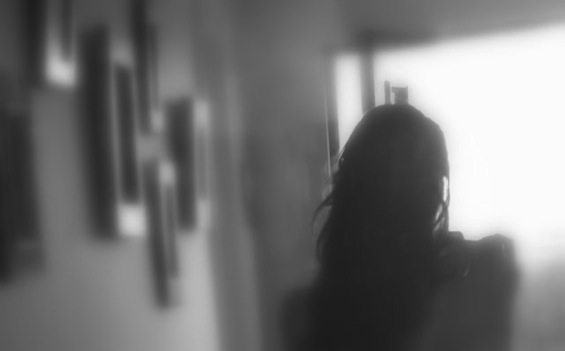
Post by Angela Alaimo O’Donnell, author of Saint Sinatra and Other Poems. Image by Claire Burge. Used with permission.
___
How to Read a Poem: Based on the Billy Collins Poem “Introduction to Poetry”

- Re-Inventing the Ode - March 19, 2014
- Poetry: Mirroring the Unseen - June 26, 2013
- Haiku: Pierced by Beauty - December 19, 2012
nancemarie says
i suppose it isn’t always love at first sight.
sometimes it’s a late blooming romance.
Anna says
Next week, I’ll be leading a discussion for the first time with a few high school students on ancient Egyptian literature and poetry. It’s stepping way out of my area of expertise (ancient Egyptians wrote poetry?), but I’m looking forward to hearing their responses.
In the meantime, I’m still pondering the question posed here of “what is poetry?” — I don’t have the answers, but think that is a great question to begin a discussion with these high school students. I have dreams they might fall in love, too….:)
Excellent post! I love the “what is jazz” quote at the end.
L. L. Barkat says
Angela, this made me want to fall in love with poetry all over again! 🙂
Wonderful, inspiring. (Tell your students I said they are luckier than they know.)
Angela Alaimo O'Donnell says
Hi Nance,
Yes, late blooming is lovely, too!
In fact, when I have older students in the class, it’s a sure bet that they are the ones who will fall in love hardest and fastest.
My favorite instance of this was a Marine colonel who was in one of my classes years ago. He had recently retired from active service. Having done several tours in Vietnam, there hadn’t been much room in his life for poetry–he was so busy trying to stay alive.
When he discovered Wilfred Owen’s sonnet, “Anthem for Doomed Youth,” and his other poems about the horrors of WWI, he was overwhelmed with the power and beauty of poetry to express experience that he had previously thought in-expressible.
By the end of the course, he was writing sonnets.
Angela Alaimo O'Donnell says
Hi Anna,
Thanks for your good words.
Yes, I think you’re right–asking students to define poetry–and giving them a range of responses from great poets (Sidney, Shelley, Emerson, Wordsworth, Coleridge, Dickinson, Frost, Auden, Sexton, etc) is a great way to go.
(And I ALWAYS finish the catalogue with Louis Armstrong!)
I wish I could be a student in your Egyptian poetry class. Enjoy!
Angela Alaimo O'Donnell says
Laura,
You do me honor. Mille Grazie!
Claire says
i rest here,
lean in
arch back
lids shutter lashes
fall in love anew
Angela Alaimo O'Donnell says
Amen!
Thank you for these lovely lines, Claire.
I also love your image that Laura posted with the “Falling in Love” piece. A young woman walking towards the light . . . isn’t she all of us, both as we were and as we’ll ever be (God willing)?
Perfect.
Tom says
Thank you for the sanity check. One could imagine our most vital poetry is never set to page, but simply whispered, sung only once, to freely feed the needy and immediate ears. A billion single sparrows, flown, yet each one somehow needed, remembered, named. Hopefully, heaven is transcribing.
L. L. Barkat says
love that, Tom 🙂