Apr 162011

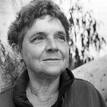
Marianne Moore (1887 – 1972), a Modernist poet known for her irony and wit (so says Wikipedia), was born in Kirkwood, Missouri, the daughter of a Presbyterian minister. Her first poems were published in 1915, and she came to the attention of Wallace Stevens, William Carlos Williams, T.S. Eliot and Ezra Pound. She became editor of The Dial literary journal, and helped launch the careers of poets Elizabeth Bishop, Allen Ginsberg, John Ashberry and James Merrill.

Her Collected Poems (1951) won the Pulizer Prize, the National Book Award and the Bollingen Prize. She died in 1972 in New York City.

Her most famous poem is “Poetry” (1919), which is included in the Colelcted Poems.

Poetry

I, too, dislike it: there are things that are important
                  beyond all this fiddle.
    Reading it, however, with a perfect contempt for it,
                  one discovers that there is in
    it after all, a place for the genuine.
        Hands that can grasp, eyes
        that can dilate, hair that can rise
             if it must, these things are important not be-
                    cause a

high sounding interpretation can be put upon them
                 but because they are
   useful; when they become so derivative as to
                  become unintelligible, the
   same thing may be said for all of us – that we
       do not admire what
      we cannot understand. The bat,
           holding on upside down or in quest of some-
                    thing to

eat, elephants pushing, a wild horse taking a roll,
                 a tireless wolf under
    a tree, the immovable critic twinkling his skin like a
                horse that feels a flea, the base-
    ball fan, the statistician – case after case
         could be cited did
         one wish it; nor is it valid
             to discriminate against “business documents
                      and

school-books”; all these phenomena are important.
                   One must make a distinction
    however: when dragged into prominence by half
                       poets,
             the result is not poetry,
nor till the autocrats among us can be
     “literalists of
     the imagination” – above
          insolence and triviality and can present

for inspection, imaginary gardens with real toads
                   in them, shall we have
   it. In the meantime, if you demand on one hand,
                 in defiance of their opinion –
       the raw material of poetry in
   all its rawness, and
   that which is on the other hand,
       genuine, then you are interested in poetry.

For National Poetry Month, we’re giving away a copy of Neruda’s Memoirs: Poems by Maureen Doallas. Leave a comment by April 20 and your name is automatically entered for the random drawing.

Posted by Glynn Young Tagged with: , , ,
Apr 152011

One of the marvelous things about the internet is how it has upended the publishing status quo, brought all kinds of new writers to the fore, and brought all kinds of writing to the attention of people all over the world. This is as true for poetry as it is for any other kind of writing and literature, and there is a wealth of sites dedicated to poetry that we particularly like and visit frequently.

The Poetry Foundation publishes Poetry magazine, and is “an independent literary organization committed to a vigorous presence for poetry in our culture. It exists to discover and celebrate the best poetry and to place it before the largest possible audience.” The foundation was established in 2003 with a major gift from philanthropist Ruth Lilly; its predecessor organization was the Modern Poetry Association, founded in 1941. The Poetry Foundation is one of the largest literary foundations in the world. At its web site, you can find articles, resources, links, podcasts, news, poets and poems.

American Life in Poetry is managed by former poet Laureate Ted Kooser, and is focused on finding and publishing poems about all elements of American life and providing them to newspapers and online publications. It’s sponsored by the Poetry Foundation and the Library of Congress, and a new poem is posted weekly.

Poet Brian Brodeur hosts the How a Poem Happens blog, where he regularly features a poem and an interview with the poet as to how it came to be written. There are currently more than 140 posts in the archive, and it’s already a wealth of information and insight.

The Academy of American Poets has a wonderful web site at Poets.org. It had regularly changing feature articles, a large archive of pomes and poets, and features like Poem-A-Day that you can subscribe to by email. It also published the American Poet magazine.

Poem Hunter is a search site for find poems, poets, lines from poems and a lot of other things. (Can’t quite remember where than line came from? Poem Hunter can help you find it.)

A feature at Information Please provides a list of poet laureates of the United States and links to most of them.

A Poetry Feed is a blog of poetry recordings managed by Karsten Piper, who teaches college writing and literature classes. Poems can be submitted for Pipe to record and post on the site.

If you have favorite poetry sites you’d like to share, please leave the links in the comment section.

And don’t forget the giveaway we have for Neruda’s Memoirs: Poems by Maurren Doallas. Just leave a comment by April 20 and you name will be automatically added to the random drawing.

Posted by Glynn Young Tagged with: , ,
Apr 142011

Maureen Doallas is an honors graduate of Vassar College, and has been a features writer and editor for more than 35 years. One of her poems is included in the Gulf of Mexico charity anthology Oil and Water… and Other Things That Don’t Mix (LL-Publications, 2010); two poems appear at Poets for Living Waters; and a third was recorded for an episode at Red Lion Square. Maureen also owns a small business, Transformational Threads, which licenses images of original fine art reproduced in custom hand-embroidery in Vietnam. She and her husband Jim Burke live in Arlington, Virginia.

Her debut collection of poetry is Neruda’s Memoirs: Poems, published earlier this year. This poem is from that collection.


Gone to Seed

Fireweed done producing,
gone to seed,

brilliance cuts a swath
through green’s shallowing shelter.

Agitated Monet yellows
burnished Van Gogh reds:
two nods to nature’s talents.

Lips of leaves
crisp
curl
cascade.

I carry a palette that can’t compete
with summer’s last firing.

If I’m lucky,
my hand will find its way
before the final fall.

Giveaway:
For National Poetry Month, we’re giving away a copy of Neruda’s Memoirs. Simply leave a comment by midnight, April 20, 2011, and your name is automatically entered. The winner will be chosen by a random drawing, and the book will be shipped directly from Amazon.com.

Related:

Peggy Rosenthal’s Image Journal review of Neruda’s Memoirs.

Review of Neruda’s Memoirs here at TweetSpeak Poetry.

Interview here at TweetSpeak Poetry.

Interview with Maureen Doallas at Faith, Fiction, Friends.

Interview with Maureen at The High Calling.

Diane Walker, a friend of Maureen’s, reads the title poem in a video for YouTube.

The stunning artwork for the book’s cover, entitled the Assumption of the Virgin, is by Randall David Tipton.

Maureen blogs at Writing Without Paper.

Posted by Glynn Young Tagged with: , , ,
Apr 132011

Nicholas Samaras is a poet and essayist, and author of Hands of the Saddlemaker (1992), which won the 1991 Yale Series of Younger Poets competition. Born in England in 1952, Samaras was raised there and in Massachusetts, later settling in New York. He is the son of Bishop Kallistos Samaras, a prominent Greek Orthodox priest and theologian.

His poems have appeared in The New Yorker, Poetry, American Scholar, the Kenyon Review, the New Republic, the Albany Review and many other publications. He received his undergraduate degree from Hellenic College in Brookline, Mass., his MFA from Columbia University and his Ph.D. in English and creative writing from the University of Denver. He lies in West Nyack, New York.

This poem is from Hands of the Saddlemaker, which, by the way, has a foreword by the late James Dickey.

A Plum Night in Jerusalem, Three A.M.

Go out into a dry, blue heat.
Walk alone in a sleeping city.

Leave your friend sleeping.
Curve and wind through the old sector.

Come to live only in the old sector.
Mark how fine the dust is, now

smooth the cobbled hallways,
how much they are what they are.

Listen to where the report and echo
of your footsteps go, how

many years they travel back.
Know that a city is in its deserted hours.

Know that to be alone is to be for once yourself.
And know there are

stones that breathe.
Stones that remember you,

remember the weight of your stance,
where you’ve come from and are

going for years.

Posted by Glynn Young Tagged with: , , ,
Apr 122011

Mark Jarman, Centennial Professor of English at Vanderbilt University in Nashville, Tennessee, was born in Mount Sterling, Kentucky and raised on California and Scotland. He’s the author of nine books of poetry, two books of essays and a book of essays co-authored with Robert McDowell. Jarman graduated from the University of Califorina at Santa Cruz with a B.A. with highest honors in English literature in 1974.

His awards include the Joseph Henry Jackson Award for poetry, three grants form the National Endownment for the Arts, and a Guggenheim fellowship. His book The Black Riviera won the 1991 Poets’ Prize. Questions for Ecclesiastes was a finalist for the National Book Critics Circle Award and won the Lenore Marshall Poetry Prize from the Academy of American Poets and The Nation magazine.

This poem is taken from Epistles: Poems (2007)

On the island of the pure in heart

On the island of the pure in heart, we did not see God. But an influx of
pink scallop shells, each the size of a fingertip, covered the sand.

On the island of the meek, a stench drove us back to the ship.

On the island of the poor in spirit, a glassy blankness came down like
rain and asked a riddle that stumped us.

Riflemen among spraypainted rock fired at us, on the island of the
righteous . One rock said, “Byron, 18—.”

On the island of the merciful, we obtained mercy.

On the island of the peacemakers, we depleted our numbers by hand-
to-hand combat, until there were only two of us – a soul and a body.

Even as they urged us to depart, on the island of the persecuted, they
begged us to stay.

Posted by Glynn Young Tagged with: , , ,
Apr 112011

David Orr, poetry columnist for the New York Times Book Review, wrote Beautiful & pointless: A Guide to Modern Poetry for me, or for readers very nearly like me: familiar with poetry but not wildly knowledgeable, who write poetry on occasion but are not particularly enthused about publishing it; and who are both aware of and wary of the Academy’s total dominance.

Orr asks many of the same questions about poetry that I have, and he answers them. Are all published poets raging liberals? (Yes, mostly.) What is it about poetry that seems so personal to read it, and even more personal to write it? (Or is that a figment of our imaginations?) Does modern poetry really have or use “forms,” or has all of that been swept away, except for occasional exercises in “how to write a haiku?” What motivates people to write poetry? Is there any real value to the creative writing industry (conferences, workshops, panels, competitions) or is it only small groups of people who stand around drinking and trying to sound clever? And what’s the point of the whole thing?

(There’s also another question Orr doesn’t ask – does poetry have to rhyme, or does it have to not rhyme? I suspect his answer would be yes.)

Orr’s book is smart, witty, often humorous with just the right amount of snarkiness and no more. It’s also approachable for a “lay” audience. He’s asking very basic questions, because he’s writing for a very specific group of people.

And in a very odd yet not unexpected way, Orr answers the questions like a poem answers questions – with a fair amount of ambiguity. Like a poem, he stops short of definitive answers (as if poetry really has any definitive answers) and instead he challenges us to look for answers in the directions he’s pointed.

The three claims Orr says are usually made for poetry – that it is a special connection to language, that it has a unique connection with our selves, and that it has a special position relative to society and/or culture – he largely dismisses, and in the case of the last two, rather quickly and succinctly dismisses. And yet he acknowledges that poetry occupies some kind of place in the public’s mind as something rather sublime. Even it that’s wrong, and it shouldn’t do that, the fact is that it does.

And he’s written a highly readable book on why that is, and perhaps why that isn’t.

Note: Orr has an article, “Public Poetry,” in the April edition of Poetry. It’s a review of four recent books of poems.

Related: ”Thoughts on Beautiful & pointless” is posted at Faith, Fiction, Friends.

Posted by Glynn Young Tagged with: , , ,
Apr 102011

Steven Marty Grant describes himself as a Southern California boy transplanted to New York City. To read his poems, you’d think he was a New York native. His poems have appeared in a number of literary magazines and journals, and he graduated from “a school you never heard of and had so many majors that even he is confused as to what his degree is in.” He blogs at Urbanality, and he has one published volume, Another Hotel Room: Selected Poems 1988-2008. You can read a review of his poetry book here.

The following poem is taken from Another Hotel Room.

Union Square

A bum recites absurdist poetry
to passersby and collects change
in a fake Burberry cap while I
slowly sip my Sunday morning
and shop for open air jalapeños,
mushrooms and cilantro.

Paint bucket drummers provide
a steady backbeat as the weekend
consumers come out to worship
and the church crowd is released
from weekly servitude.

Across the square, a painter discusses
politics with a jewelry maker
and a guy in a Gumby t-shirt.

As the sun plays peak-a-boo
with the masts of Mannahatta,
I wonder how long the fresh cut roses
will last if I decide to splurge.

A toddler pilots a stroller down the sidewalk,
parents in tow, while four teens knee and kick
an innocent bean bag back and forth
above the ghosts of potter’s field.

The voice of the city is clear this morning
and it sings to me; a medley of ballads,
seductive love songs and, of course,
a full complement of the blues.

Posted by Glynn Young Tagged with: , ,
Apr 092011

Anya Krugovoy Silver is professor of English and Interdisciplinary Studies at Mercer University in Macon, Georgia. She has published poetry in numerous journals, including Image, New Ohio Review, Witness, Prairie Schooner, Christian Century, Christianity and Literature, Anglican Theological Review, Laurel Review, Iowa Review, North American Review and others. Her first collection, The Ninety-Third Name of God: Poems was published by LSU Press in 2010.

Many of the poems in The Ninety-Third Name of God deal with breast cancer – discovery, mastectomy, recovery, including the one below.

Ash Wednesday

How comforting, the smudge on each forehead:
I’m not to be singled out after all.
From dust you came. To dust you will return.
My mastectomy, a memento mori,
prosthesis smooth as a polished skull.
I like the solidity of this prayer,
the ointment thumbed into my forehead,
my knees pressing hard on the velvet rail.
If God won’t give me His body to clutch,
I’ll grind this soot in my skin instead.
If it can’t hold the flame that burned by breast,
I’ll char my brow; I’ll blacken my pores; I’ll flaunt
with ash this flaw in His creation.

Posted by Glynn Young Tagged with: , , ,
Apr 082011

Ilya Kaminsky was born in 1977 in Odessa in The Ukraine (then the Soviet Union), and came to the United States in 1993 when his family was granted political asylum. He is the author of the chapbook Musica Humana and Dancing in Odessa, which won several awards. He’s also received a Whiting Writers’ Award, the annual Ruth Lilley Poetry Fellowship and a Lannan Foundation Literary Fellowship.

Kaminksy has served as co-editor of The Ecco Book of International Poetry (2010) and as editor and translator for This Lamentable City: Poems of Polina Barskova (2010). He teaches contemporary world poetry, creative writing and literary translation in the Master of Fine Arts program in Creative Writing at San Diego State University.

This is the title poem from Dancing in Odessa (2004).

Dancing in Odessa

We lived north of the future, days opened
letters with a child’s signature, a raspberry, a page of sky.

My grandmother threw tomatoes
from her balcony, she pulled imagination like a blanket
over my head. I painted
my mother’s face. She understood
loneliness, hid the dead in the earth like partisans.

The night undressed us (I counted
its pulse) my mother danced, she filled the past
with peaches, casseroles. At this, my doctor laughed, his granddaughter
touched my eyelid – I kissed

the back of her knee. The city trembled,
a ghost-ship setting sail.
And my classmate invented twenty names for Jew.
He was an angel, he had no name,
Wrestled, yes. My grandfather fought

The German tanks on tractors, I kept a suitcase full
Of Brodsky’s poems. The city trembled,
A ghost-ship setting sail.
At night, I woke to whisper: yes, we lived.
We lived, yes, don’t say it was a dream.

At the local factory, my father
took a handful of snow, put it in my mouth.
The sun began a routine narration,
Whitening their bodies: mother, father dancing, moving
As the darkness spoke behind them.
It was April. The sun washed the balconies, April.

I retell the story the light etches
into my hand: Little book, go to the city without me.

Posted by Glynn Young Tagged with: , ,
Apr 072011

J. Michael Martinez is a young poet but already one with impressive credentials. A graduate of Northern Colorado University (B.A.) and George Mason University (M.F.A.), his poems have appeared in New American Writing, Five Fingers Review, The Colorado Review, and Crab Orchard Review, among others. He received the 2006 Five Fingers Review Poetry Prize and his collection Heredities: Poems received the Walt Whitman Award from the Academy of American Poets. He is currently studying for his Ph.D. in literature at the University of Colorado at Boulder. You can find his web site and blog here.

This poem is from Heredities (2010).

The Lady of Guadalupe’s Dream and Jade Ruin

And she said: Does darkness list our erasures and become beautiful?

And she said: This I love, I translate into advent and wild foxgrape,
                the blind staggers of water.

And then she said: The dead will return, narrow gates unlatched.

To which she replied: His body is air written between my hands.

Which is when she carved an arrow upon linden, leaf & chaff.

Which is when the butterflies hatched from her footprint.

Which was how she cut her fingers with seaweed and bitter jewel.

Which was when our martye became the hour of unsung reeds.

Posted by Glynn Young Tagged with: , ,
Apr 062011

Ava Leavell Haymon has written three poetry collections — Why the House Is Made of Gingerbread, Kitchen Heat and The Strict Economy of Fire, and published five chapbooks from small presses. She’s also written seven plays for children. She teaches poetry writing in Baton Rouge, Louisiana, and directs a writers’ retreat center in the mountains of New Mexico.

This poem is from Why the House is Made of Gingerbread: Poems (2010), a poetic retelling of the fairy tale of Hansel and Gretel.


Year’s Turn

A late summer sunbeam slanted inside
and reddened to amber. Gretel reached
the broom into corners, teasing
the dot of color. The girl’s

limber movements set the witch
muttering: Fields of grain with no shade,
knife that keeps its edge
. A few words –
Bees and candles, year’s turn

growled into Gretel’s hearing,
fumbled words that twisted
the stiff mouth. Gretel saw sooty teeth.
She took a breath to ask something,

but the plaything of light
withdrew, and the dirty floor
had to be swept clean
before it was too dark to see.

Video: The author reads What the Witch Wanted from the same work.

Note: Scott Cairns, whom we featured on Monday for National Poetry Month, has a new poem, “First Storm and Thereafter,” published in the April edition of Poetry. And it’s a good one.

Posted by Glynn Young Tagged with: , , ,
Apr 052011

The first time I heard of Andrei Codrescu, he was speaking on National Public Radio. And he was speaking about my hometown, New Orleans. And he was speaking like he knew what he was talking about, which he did, and with an Eastern European accent. Who was this guy?

Codrescu was born in Romania. He published his first poems in Romanian, but left the country to escape communism. He eventually landed in America, and lived in Detroit, New York, San Francisco, New Orleans and Baton Rouge, where he retired after 2009 as MacCurdy Distinguished Professor of English at Louisiana State University. He’s published several books of poetry, as well as novels, essays and screenplays. He received critical acclaim for his coverage of the 1989 revolution in Romania for National Public Radio and ABC News, and has been honored with numerous awards and recognitions.

This poem is from Jealous Witness: Poems (2008).

bicycle

touch that spoke while it spins
at the world exhibition in paris as all
the characters of sentimental novels
who have fled their masters’ manuscripts
with morcol the detective of shadows
in hot pursuit being recorded by m. queneau
are mounting the bicycle seat one by one
and deciding their destinies in a fulgurant second
the appeal and the description by later
exegetic apologists for the postmodern
takes longer than we thought and besides
nobody dares touch the spoke as the wheel
spins not even the talented ones whose hands
have been slapped by something we’ll call
culture or hypnosis or techno-somnolence
meanwhile time flies and nobody’s having fun

Posted by Glynn Young Tagged with: , , ,
Apr 042011

Nikki Giovanni is a University Distinguished Professor at Virginia Tech University, where she teaches writing and literature. A poet, activist and educator, Giovanni is the author of more than 30 books, has received 19 honorary doctorates and numerous awards, and has even been nominated for a Grammy Award. Born in Knoxville, Tennessee, in 1943, she received a B.A. in history from Fisk University, and also studied at University of Pennsylvania and Columbia University. She taught at Rutgers before she joined the faculty at Virginia Tech in 1987.

This poem is from Quilting the Black-Eyed Pea: Poems and Not Quite Poems (2002):


The Wind in the Bottle

Twice she dreamed of rainbows
not for the pots of gold
nor the elves basking in the colors
but the symmetry of the line
going up and down

Once she wished for wings
or at least red shoes
to ease on down the road

Often she worries
two arms one head one heart
can’t protect the falling fruit

Something will stay on the tree
and rot
Something will fall
and be left behind

Twice she dreamed of rainbows
playing hide and seek
with the clouds

The colors defy the sun

Who kisses the wind
Good night

Posted by Glynn Young Tagged with: , ,
Apr 032011

Scott Cairns, professor of English and Director of Creativity Writing at the University of Missouri-Columbia, is the author of six collections of poetry, the memoir Short Trip to the Edge, the non-fiction work The End of Suffering, and numerous articles, essays and even a libretto for an oratorio. I had the distinct pleasure of taking a two-day poetry seminar with 11 others led by Cairns at Laity Lodge in Texas, and it was a marvelous experience, sitting in the sun and wind of late September and talking and reading poetry.

This poem is from Compass of Affection: Poems New and Selected.

Having Descended to the Heart

Once you have grown used to the incessant
prayer the pulse insists upon, and once
that throbbing din grows less diverting

if undiminished, you’ll surely want
to looka round – which is when you’ll likely
apprehend that you can’t see a thing.

Terror sometimes suports an up side, this time
serves as tender, hauling you to port.
What’s most apparent in the dark is how

the heart’s embrace, if manifestly
intermittent, is really quite
reliable, and very nearly bides

as if another sought to join you there.


____

Subscribe to Every Day Poems— read a poem a day with us, become a better poet or teach others to become better poets.

Every Day Poems

Posted by Glynn Young Tagged with: , ,
Apr 022011

Luci Shaw is a poet, essayist, retreat leader and teacher. She’s published eight books of poetry, and her poems have appeared in publications ranging from Books & Culture and The Christian Century to The Southern Review. She is currently Writer in Residence for Regent College in Vancouver, British Columbia. Shaw was born in England in 1928, and has lived in Canada, Australia and, since 1950, the United States (currently Bellingham, Washington).

This poem is from her latest collection, Harvesting Fog.

Frio River, Texas

The river, up to the ankles,
invites our feet to test its depth and learn
through the skin of our soles
how water chisels limestone,
knickling it, leaving the long print of fluid
all along the stream bed. We discover

what it might be like to walk on water,
and how the stone supports the flow
composing its own fluid music, a naked sound
around us as we wade, a lilt that lightens the heart.
Together, sun and stone and water write
their rippling continuo between the hills.
Sometimes the lens of water, like an eye,
deepens to a blue profundity, the way
music needs no words, being
its own language. Its own measure.


____

Subscribe to Every Day Poems— read a poem a day with us, become a better poet or teach others to become better poets.

Every Day Poems

Posted by Glynn Young Tagged with: , ,
Apr 012011

There must be something one can say about National Poetry Month starting on April Fool’s Day. But I can’t, or won’t.

For National Poetry Month 2011, TweetSpeak Poetry will be featuring a series of posts on poets living and dead, published and unpublished, and including links to sites that we’ve found on the internet that are all about poetry.

The internet has done something that no one really expected – it’s moved poetry from the academy to the web, and revitalized it with the lifeblood of the streets. You can find every kind of poetry imaginable (and some unimaginable) on the web – good, bad, indifferent, soaring, sonnets, rondels, limericks, funny, serious, eulogies; you name it, it’s all there.

One indication of this interweaving of poem and web: earlier this week, One Stop Poetry was one of the five finalists for a Shorty Award in the arts category – and it won. Imagine a site devoted to poetry winning any kind of internet-related award! Several of the creators of One Stop Poetry were on hand at the dinner in New York for the announcement – and they tweeted all over Twitter in their excitement.

Each of our posts this month will feature a poem. And what better way to start than with a poem by the most recent winner of the National Book Award for poetry, Terrance Hayes, who received the honor for Lighthead: Poems.

Fish Head for Katrina

The mouth is where the dead
Who are not dead do not dream

A house of damaged translations
Task married to distraction

As in a bucket left in a storm
A choir singing in the rain like fish

Acquiring air under water
Prayer and sin the body

Performs to know it is alive
Lit from the inside by reckoning

As in a city
Which is no longer a city

The tongue reaching down a tunnel
And the teeth wet as windows

Set along a highway
Where the dead live in the noise

Of their shotgun houses
They drift from their wards

Like fish spreading thin as a song
Diminished by its own opening

Split by faith and soaked in it
The mouth is a flooded machine

Lighthead is Terrance Hayes’ fourth collection of poetry. A professor of creative writing at Carnegie Mellon University, Hayes has received the National Poetry Series Open Competition award, the Kate Tufts Discovery Award, a Pushcart Prize, three Best American Poetry selections, a Whiting Writers Award, a fellowship from the National Endowment for the arts and a Guggenheim Fellowship.

Other books of poetry by Hayes include Hip Logic, the collections elected for the National Poetry series; Muscular Music; and Wind in a Box. He was born in Columbia, South Carolina, in 1971 and lives with his family in Pittsburgh.

Posted by Glynn Young Tagged with: , , ,
Apr 302010

Edgar Allan Poe (1809-1849) published his first collection of poems, Tamarlane, and Other Poems, in 1827, when he was 18 years old. A tendency to un up debts (including for gambling) kept him in constant state of reinvention – college student, poet, short story writer, soldier/officer school, literary journal editor and critic.

His personal life seemed to have stayed a general mess, but he had an enormous impact on both American and world literature. Consider the stories and poems that have been filmed, published, re-published, anthologized, celebrated and widely admired for more than 150 years: “Murders in the Rue Morgue,” “Fall of the House of Usher,” “The Raven,” “The Tell-Tale Heart,” “Annabel Lee,” “The Bells,” “Ulalame,” “To Helen.”

For National Poetry Month, three by Edgar Allan Poe:

Annabel Lee

It was many and many a year ago,
In a kingdom by the sea,
That a maiden there lived whom you may know
By the name of Annabel Lee;
And this maiden she lived with no other thought
Than to love and be loved by me.

I was a child and she was a child,
In this kingdom by the sea:
But we loved with a love that was more than love–
I and my Annabel Lee;
With a love that the winged seraphs of heaven
Coveted her and me.

And this was the reason that, long ago,
In this kingdom by the sea,
A wind blew out of a cloud, chilling
My beautiful Annabel Lee;
So that her highborn kinsman came
And bore her away from me,
To shut her up in a sepulchre
In this kingdom by the sea.

The angels, not half so happy in heaven,
Went envying her and me–
Yes!–that was the reason (as all men know,
In this kingdom by the sea)
That the wind came out of the cloud by night,
Chilling and killing my Annabel Lee.

But our love it was stronger by far than the love
Of those who were older than we–
Of many far wiser than we–
And neither the angels in heaven above,
Nor the demons down under the sea,
Can ever dissever my soul from the soul
Of the beautiful Annabel Lee:

For the moon never beams, without bringing me dreams
Of the beautiful Annabel Lee;
And the stars never rise, but I feel the bright eyes
Of the beautiful Annabel Lee;
And so, all the night-tide, I lie down by the side
Of my darling–my darling–my life and my bride,
In her sepulchre there by the sea,
In her tomb by the sounding sea.

A Dream Within A Dream

Take this kiss upon the brow!
And, in parting from you now,
Thus much let me avow:
You are not wrong who deem
That my days have been a dream;
Yet if hope has flown away
In a night, or in a day,
In a vision, or in none,
Is it therefore the less gone?
All that we see or seem
Is but a dream within a dream.

I stand amid the roar
Of a surf-tormented shore,
And I hold within my hand
Grains of the golden sand–
How few! yet how they creep
Through my fingers to the deep,
While I weep–while I weep!
O God! can I not grasp
Them with a tighter clasp?
O God! can I not save
One from the pitiless wave?
Is all that we see or seem
But a dream within a dream?

The Valley of Unrest

Once it smiled a silent dell
Where the people did not dwell;
They had gone unto the wars,
Trusting to the mild-eyed stars,
Nightly, from their azure towers,
To keep watch above the flowers,
In the midst of which all day
The red sun-light lazily lay.
Now each visitor shall confess
The sad valley’s restlessness.
Nothing there is motionless —
Nothing save the airs that brood
Over the magic solitude.
Ah, by no wind are stirred those trees
That palpitate like the chill seas
Around the misty Hebrides!
Ah, by no wind those clouds are driven
That rustle through the unquiet Heaven
Uneasily, from morn till even,
Over the violets there that lie
In myriad types of the human eye —
Over three lilies there that wave
And weep above a nameless grave!
They wave: — from out their fragrant tops
Eternal dews come down in drops.
They weep: — from off their delicate stems
Perennial tears descend in gems.

Related:

The Edgar Allan Poe Society of Baltimore carries on Poe’s legacy.

There is an Edgar Allan Poe Museum in Richmond, Va. (which I’ve visited).

Postings and News Updates:

Karen at Phoenix-Karenee started drawing in her copy of InsideOut: Poems by L.L. Barkat — and then got permission to show what she did: “Drawing in Books…of poetry.”

Thursday’s Poem A Day from the Academy of American Poets was “Sharks in the River” by Ada Limon, the title poem in her collection published by Milkweed Editions.

Posted by Glynn Young Tagged with: ,
Apr 292010

Robert Lowell (1917-1977) was born to a prominent Boston family. He attended Harvard for two years, and then transferred to Kenyon College, where he studied poetry under John Crowe Ransom. Then he took graduate courses at Louisiana State University, where he studied under Robert Penn Warren and Cleanth Brooks. His second book of poetry, Lord Weary’s Castle, which received the Pulitzer Prize in 1947 when Lowell was 30, explored the dark side of America’s Puritan legacy.

Lowell was a conscientious objector during World War II (for which he was imprisoned) and protested the Vietnam War as well. Under the influence of younger poets like Allen Ginsberg, his later poetry changed from the more formal and traditional to the more personal. His Life Studies (1959) had an enormous impact on modern poetry, and he is considered by many to be the most important American poet of the second half of the 20th century.

For National Poetry Month, here are three poems by Robert Lowell.

Homecoming

What was is … since 1930;
the boys in my old gang
are senior partners. They start up
bald like baby birds
to embrace retirement.

At the altar of surrender,
I met you
in the hour of credulity.
How your misfortune came out clearly
to us at twenty.

At the gingerbread casino,
how innocent the nights we made it
on our Vesuvio martinis
with no vermouth but vodka
to sweeten the dry gin–

the lash across my face
that night we adored . . .
soon every night and all,
when your sweet, amorous
repetition changed.

Children of Light

Our fathers wrung their bread from stocks and stones
And fenced their gardens with the Redmen’s bones;
Embarking from the Nether Land of Holland,
Pilgrims unhouseled by Geneva’s night,
They planted here the Serpent’s seeds of light;
And here the pivoting searchlights probe to shock
The riotous glass houses built on rock,
And candles gutter by an empty altar,
And light is where the landless blood of Cain
Is burning, burning the unburied grain.

For the Union Dead

Relinquunt Ommia Servare Rem Publicam.

The old South Boston Aquarium stands
in a Sahara of snow now. Its broken windows are boarded.
The bronze weathervane cod has lost half its scales.
The airy tanks are dry.
Once my nose crawled like a snail on the glass;
my hand tingled to burst the bubbles
drifting from the noses of the crowded, compliant fish.

My hand draws back. I often sign still
for the dark downward and vegetating kingdom
of the fish and reptile. One morning last March,
I pressed against the new barbed and galvanized

fence on the Boston Common. Behind their cage,
yellow dinosaur steamshovels were grunting
as they cropped up tons of mush and grass
to gouge their underworld garage.

Parking spaces luxuriate like civic
sandpiles in the heart of Boston.
a girdle of orange, Puritan-pumpkin colored girders
braces the tingling Statehouse,

shaking over the excavations, as it faces Colonel Shaw
and his bell-cheeked Negro infantry
on St. Gaudens’ shaking Civil War relief,
propped by a plank splint against the garage’s earthquake.

Two months after marching through Boston,
half of the regiment was dead;
at the dedication,
William James could almost hear the bronze Negroes breathe.

Their monument sticks like a fishbone
in the city’s throat.
Its Colonel is a lean
as a compass-needle.

He has an angry wrenlike vigilance,
a greyhound’s gentle tautness;
he seems to wince at pleasure,
and suffocate for privacy.

He is out of bounds now. He rejoices in man’s lovely,
peculiar power to choose life and die-
when he leads his black soldiers to death,
he cannot bend his back.

On a thousand small town New England greens
the old white churches hold their air
of sparse, sincere rebellion; frayed flags
quilt the graveyards of the Grand Army of the Republic

The stone statutes of the abstract Union Soldier
grow slimmer and younger each year-
wasp-waisted, they doze over muskets
and muse through their sideburns…

Shaw’s father wanted no monument
except the ditch,
where his son’s body was thrown
and lost with his “niggers.”

The ditch is nearer.
There are no statutes for the last war here;
on Boylston Street, a commercial photograph
shows Hiroshima boiling

over a Mosler Safe, the “Rock of Ages”
that survived the blast. Space is nearer.
when I crouch to my television set,
the drained faces of Negro school-children rise like balloons.

Colonel Shaw
is riding on his bubble,
he waits
for the blessed break.

The Aquarium is gone. Everywhere,
giant finned cars nose forward like fish;
a savage servility
slides by on grease.

The ancient owls’ nest must have burned.
Hastily, all alone,
a glistening armadillo left the scene,
rose-flecked, head down, tail down,

and then a baby rabbit jumped out,
short-eared, to our surprise.
So soft!- a handful of intangible ash
with fixed, ignited eyes.

Too pretty, dreamlike mimicry!
O falling fire and piercing cry
and panic, and a weak mailed fist
clenched ignorant against the sky!

Related:

Audio: Robert Lowell reads his “Skunk Hour.”

Audio: Robert Lowell reads his “The Public Garden.”

Postings and News Updates:

Wednesday’s Poem A Day from the Academy of American Poets was “Born Late” by David Dodd Lee.

Today is Poem in Your Pocket Day, sponsored by the Academy.

Former U.S. Poet Laureate Ted Kooser highlights “The Yellow Bowl” by Rachel Contreni Flynn at American Life in poetry.

Lullabies for Maniacs” by Kevin Canfield at the Poetry Foundation describes Natalie Merchant’s new 2-disc CD that sets American and British poetry to song.

Christopher Buckley”s “Poverty” at How A Poem Happens.

Posted by Glynn Young Tagged with: ,
Apr 282010

Sylvia Plath (1932-1963) became widely known and appreciated only after her suicide. She published her first poem at age 18 (in the Christian Science Monitor) and had only one book of poetry, Colossus, published by the time of her death. (Before her death, she had published the semi-autobiographical The Bell Jar under the pseudonym Victoria Lucas. Three other volumes of poetry, including her most famous work Ariel, were published after her death.

Plath’s The Collected Poems received the Pulitzer Prize for Poetry in 1982, making her the first poet to win the prize after death.

For National Poetry Month, here are three poems by Sylvia Plath.

Daddy

You do not do, you do not do
Any more, black shoe
In which I have lived like a foot
For thirty years, poor and white,
Barely daring to breathe or Achoo.

Daddy, I have had to kill you.
You died before I had time–
Marble-heavy, a bag full of God,
Ghastly statue with one gray toe
Big as a Frisco seal

And a head in the freakish Atlantic
Where it pours bean green over blue
In the waters off beautiful Nauset.
I used to pray to recover you.
Ach, du.

In the German tongue, in the Polish town
Scraped flat by the roller
Of wars, wars, wars.
But the name of the town is common.
My Polack friend

Says there are a dozen or two.
So I never could tell where you
Put your foot, your root,
I never could talk to you.
The tongue stuck in my jaw.

It stuck in a barb wire snare.
Ich, ich, ich, ich,
I could hardly speak.
I thought every German was you.
And the language obscene

An engine, an engine
Chuffing me off like a Jew.
A Jew to Dachau, Auschwitz, Belsen.
I began to talk like a Jew.
I think I may well be a Jew.

The snows of the Tyrol, the clear beer of Vienna
Are not very pure or true.
With my gipsy ancestress and my weird luck
And my Taroc pack and my Taroc pack
I may be a bit of a Jew.

I have always been scared of you,
With your Luftwaffe, your gobbledygoo.
And your neat mustache
And your Aryan eye, bright blue.
Panzer-man, panzer-man, O You–

Not God but a swastika
So black no sky could squeak through.
Every woman adores a Fascist,
The boot in the face, the brute
Brute heart of a brute like you.

You stand at the blackboard, daddy,
In the picture I have of you,
A cleft in your chin instead of your foot
But no less a devil for that, no not
Any less the black man who

Bit my pretty red heart in two.
I was ten when they buried you.
At twenty I tried to die
And get back, back, back to you.
I thought even the bones would do.

But they pulled me out of the sack,
And they stuck me together with glue.
And then I knew what to do.
I made a model of you,
A man in black with a Meinkampf look

And a love of the rack and the screw.
And I said I do, I do.
So daddy, I’m finally through.
The black telephone’s off at the root,
The voices just can’t worm through.

If I’ve killed one man, I’ve killed two–
The vampire who said he was you
And drank my blood for a year,
Seven years, if you want to know.
Daddy, you can lie back now.

There’s a stake in your fat black heart
And the villagers never liked you.
They are dancing and stamping on you.
They always knew it was you.
Daddy, daddy, you bastard, I’m through.

Lady Lazarus

I have done it again.
One year in every ten
I manage it–

A sort of walking miracle, my skin
Bright as a Nazi lampshade,
My right foot

A paperweight,
My face a featureless, fine
Jew linen.

Peel off the napkin
O my enemy.
Do I terrify?–

The nose, the eye pits, the full set of teeth?
The sour breath
Will vanish in a day.

Soon, soon the flesh
The grave cave ate will be
At home on me

And I a smiling woman.
I am only thirty.
And like the cat I have nine times to die.

This is Number Three.
What a trash
To annihilate each decade.

What a million filaments.
The peanut-crunching crowd
Shoves in to see

Them unwrap me hand and foot–
The big strip tease.
Gentlemen, ladies

These are my hands
My knees.
I may be skin and bone,

Nevertheless, I am the same, identical woman.
The first time it happened I was ten.
It was an accident.

The second time I meant
To last it out and not come back at all.
I rocked shut

As a seashell.
They had to call and call
And pick the worms off me like sticky pearls.

Dying
Is an art, like everything else.
I do it exceptionally well.

I do it so it feels like hell.
I do it so it feels real.
I guess you could say I’ve a call.

It’s easy enough to do it in a cell.
It’s easy enough to do it and stay put.
It’s the theatrical

Comeback in broad day
To the same place, the same face, the same brute
Amused shout:

‘A miracle!’
That knocks me out.
There is a charge

For the eyeing of my scars, there is a charge
For the hearing of my heart–
It really goes.

And there is a charge, a very large charge
For a word or a touch
Or a bit of blood

Or a piece of my hair or my clothes.
So, so, Herr Doktor.
So, Herr Enemy.

I am your opus,
I am your valuable,
The pure gold baby

That melts to a shriek.
I turn and burn.
Do not think I underestimate your great concern.

Ash, ash–
You poke and stir.
Flesh, bone, there is nothing there–

A cake of soap,
A wedding ring,
A gold filling.

Herr God, Herr Lucifer
Beware
Beware.

Out of the ash
I rise with my red hair
And I eat men like air.

Morning Song

Love set you going like a fat gold watch.
The midwife slapped your footsoles, and your bald cry
Took its place among the elements.

Our voices echo, magnifying your arrival. New statue.
In a drafty museum, your nakedness
Shadows our safety. We stand round blankly as walls.

I’m no more your mother
Than the cloud that distills a mirror to reflect its own slow
Effacement at the wind’s hand.

All night your moth-breath
Flickers among the flat pink roses. I wake to listen:
A far sea moves in my ear.

One cry, and I stumble from bed, cow-heavy and floral
In my Victorian nightgown.
Your mouth opens clean as a cat’s. The window square

Whitens and swallows its dull stars. And now you try
Your handful of notes;
The clear vowels rise like balloons.

Postings and News Updates:

Tuesday’s Poem a Day from the Academy of American Poets was “William James, Henry James” by Sarah Gridley, from her Green Is the Orator published by the University of California Press.

Posted by Glynn Young Tagged with: ,
Apr 272010

Jack Gilbert (1925 – ) published his first book of poems, Views of Jeopardy, in 1962, and his second, Monolithos, nearly 20 years later. In between he moved to Europe, traveled as a lecturer on American literature for the U.S. State Department. He’s also the author of three other books of poetry: Transgressions: Selected Poems, The Great Fires: Poems 1982-1992, and Refusing Heaven, which won the National Book Critics Circle Award. He’s also received numerous other prizes and grants, and has been nominated twice for the Pulitzer Prize in poetry. (We reviewed The Great Fires here at TweetSpeak last November.)

Author and poet James Dickey said this about Gilbert’s work: “He takes himself away to a place more inward than is safe to go; from that awful silence and tightening, he returns to us poems of savage compassion.”

For National Poetry Month, here are three by Jack Gilbert.

The Great Fires

Love is apart from all things.
Desire and excitement are nothing beside it.
It is not the body that finds love.
What leads us there is the body.
What is not love provokes it.
What is not love quenches it.
Love lays hold of everything we know.
The passions which are called love
also change everything to a newness
at first. Passion is clearly the path
but does not bring us to love.
It opens the castle of our spirit
so that we might find the love which is
a mystery hidden there.
Love is one of many great fires.
Passion is a fire made of many woods,
each of which gives off its special odor
so we can know the many kinds
that are not love. Passion is the paper
and twigs that kindle the flames
but cannot sustain them. Desire perishes
because it tries to be love.
Love is eaten away by appetite.
Love does not last, but it is different
from the passions that do not last.
Love lasts by not lasting.
Isaiah said each man walks in his own fire
for his sins. Love allows us to walk
in the sweet music of our particular heart.

The Abnormal Is Not Courage

The Poles rode out from Warsaw against the German
Tanks on horses. Rode knowing, in sunlight, with sabers,
A magnitude of beauty that allows me no peace.
And yet this poem would lessen that day. Question
The bravery. Say it’s not courage. Call it a passion.
Would say courage isn’t that. Not at its best.
It was impossib1e, and with form. They rode in sunlight,
Were mangled. But I say courage is not the abnormal.
Not the marvelous act. Not Macbeth with fine speeches.
The worthless can manage in public, or for the moment.
It is too near the whore’s heart: the bounty of impulse,
And the failure to sustain even small kindness.
Not the marvelous act, but the evident conclusion of being.
Not strangeness, but a leap forward of the same quality.
Accomplishment. The even loyalty. But fresh.
Not the Prodigal Son, nor Faustus. But Penelope.
The thing steady and clear. Then the crescendo.
The real form. The culmination. And the exceeding.
Not the surprise. The amazed understanding. The marriage,
Not the month’s rapture. Not the exception. The beauty
That is of many days. Steady and clear.
It is the normal excellence, of long accomplishment.

In Dispraise of Poetry

When the King of Siam disliked a courtier,
he gave him a beautiful white elephant.
The miracle beast deserved such ritual
that to care for him properly meant ruin.
Yet to care for him improperly was worse.
It appears the gift could not be refused.

Related:

Audio: Jack Gilbert reads his “Big and Small: Midnight to Four A.M.

Postings and News Updates:

Monday’s Poem A Day from the Academy of American Poets was “The Widows of Gravesend” by L.S. Asekoff, from The Gate of Horn published by Northwestern University Press.

Posted by Glynn Young Tagged with: ,